
Programmatic or direct: which one fits your DOOH campaign?
Two ways to buy the same digital screen. We compare direct and programmatic buying, what they cost, and when to pick which.
Posters, stickers, projection, green graffiti, booked sites and the full city take over. Which job each one does, and how to pick.
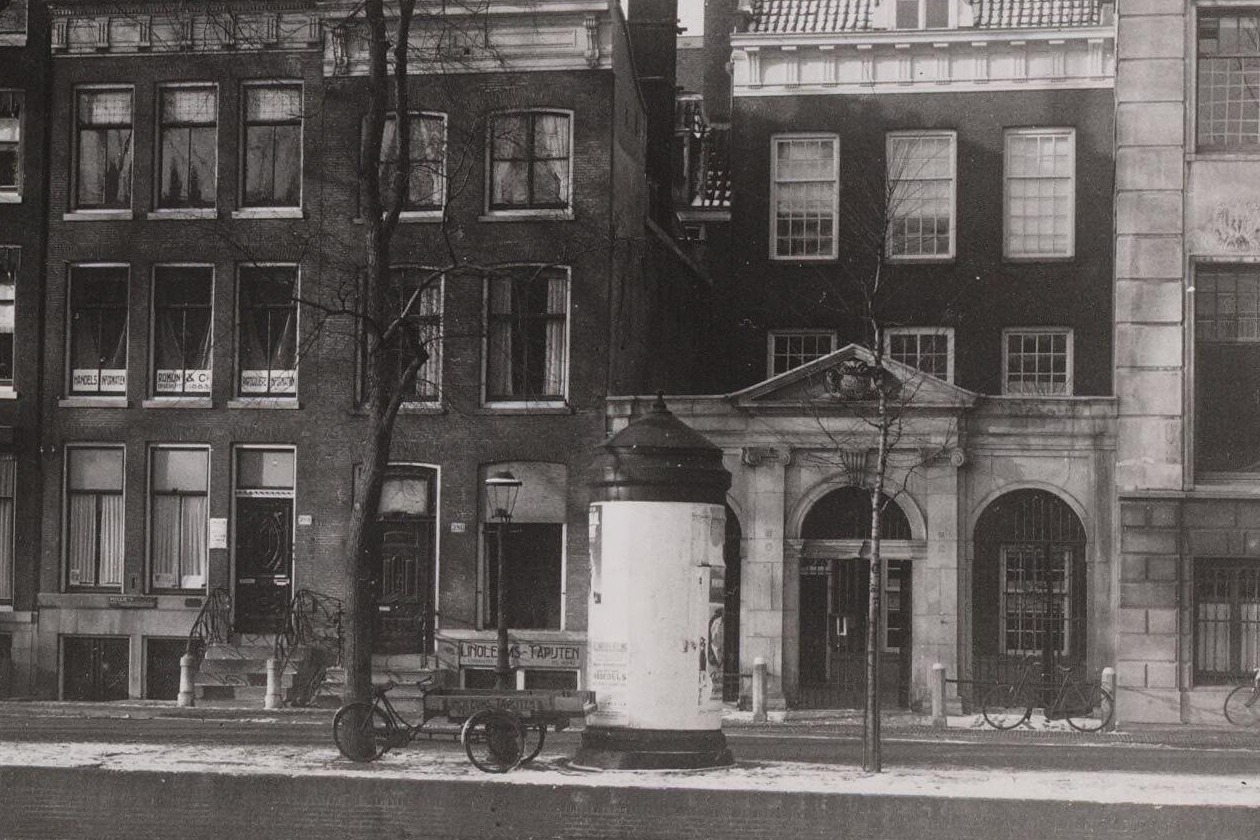
By the mid-nineties a crew in Amsterdam knew that one yellow glass container took exactly sixteen posters. The stainless steel sculpture a few metres away, eight cubes stacked on top of each other, took 72 A2 sheets. Exactly 72.
They learned it the slow way, night after night, until every surface in their district had a number.
Half a century earlier the work looked different again. In 1948, the writer and former paster Serge Markx records, crews threw the poster “like a wet ball high against the object” and smoothed it out with a broom.
Methods change. The question under them stays the same: which surface does this job? This last part of our series answers it for the outdoor advertising options a brand has today.
Part one traced where guerrilla marketing came from. Part two followed the poster war. Part three set out who says yes to a wall, part four put booked out of home and the street side by side, and part five explained why every campaign ends up in a photograph.
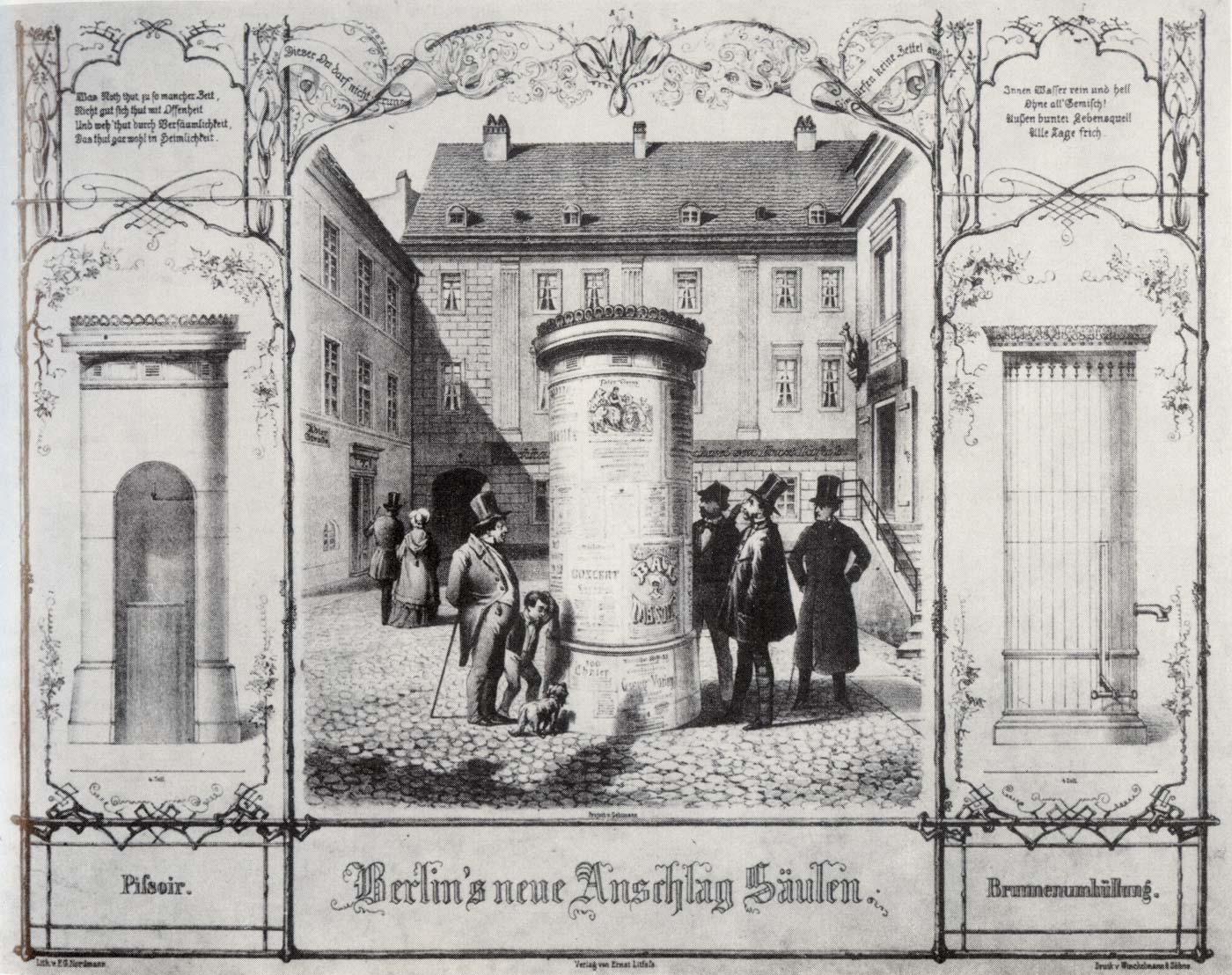
Every format on the street began as a surface somebody found useful. Amsterdam’s transformer columns, the peperbussen, arrived in 1903 with the city’s first power station and carried advertising almost from the start. Kiosks and hoardings followed. Part four showed how Berlin and Paris turned their advertising columns into a business deal in the 1850s and 1860s.
Cities shape formats from the other side as well, by making a surface useless. Paris painted Défense d’afficher, loi du 29 juillet 1881 on its walls. In 2000 the British government’s guide to fly-posting recommended stippled paint, which roughens a surface so paper won’t hold. Bradford stippled its lamp columns and signal cabinets up to eight feet and no higher, because nobody pasted above that. Westminster wrote slatted hoardings into its planning conditions.
So a format is a surface with a job attached. Somebody has to want that surface. And it has to hold.
Wild posting is the oldest option on this list and still the one we do most. Its job is saturation. The same sheet, repeated along a street, tells everyone who walks it that something is happening here, now. One billboard can’t say that.
In the 1980s the kit was a bag of posters on one side of the handlebars and a bucket of glue on the other, slopping over the rim at every bump and into your shoes. A free pole by the Westerkerk took six.
The kit has improved since. The logic hasn’t moved. In November 2025 we put Aligne’s holiday collection up across Soho and the Upper East Side in New York, on big 72 by 48 inch sheets. Two neighbourhoods. One look, repeated. For three days you couldn’t walk those streets without meeting the brand again.

Posters suit anything with a date and a place: a launch, a drop, a store opening, a gig. A run usually lasts around two weeks. Sizes go from A2 on a pole to XL sheets on a construction wall.
A sticker works at arm’s length. It sits at eye level and lasts longer than paper. Wild stickers fill the street between the poster sites and catch people while they are standing still, at a crossing, at a stop, at a door.
They rarely work alone. When Icelandair went looking for “a terrible photographer” across eight European cities in March 2026, stickers ran alongside the posters and carried the QR code that delivered the punchline.
Use them to stretch a poster campaign into the side streets, or to keep a name around after the posters have gone.

Wild projection works after dark and leaves nothing behind. It can fill a whole building front. It can also be carried through a crowd by a crew with a walking projector. And it is quick: the content can change the same night.
In May 2026 FC Barcelona wanted to mark the anniversary of Johan Cruyff’s death with something people would feel in the streets. The brief came at the last minute. Projections went up across Barcelona that night, in places chosen for what they meant.
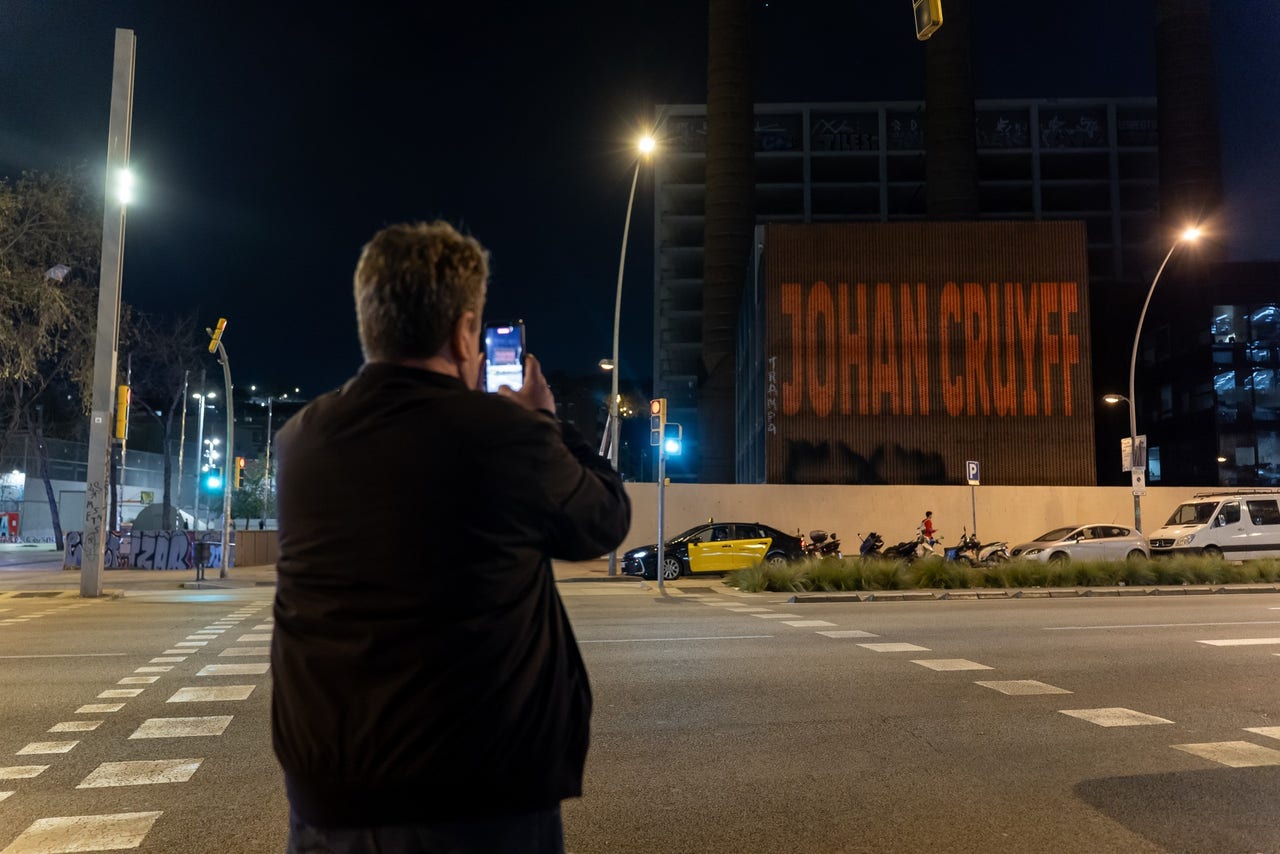
Projection is the option for moments. An announcement, a tribute, the night before a release. Afterwards it lives on in photographs and film, which is exactly why part five matters.
Green graffiti is a stencil sprayed onto the pavement in chalk paint. It lasts about a week and then fades. Its close relative, reverse graffiti, works the other way round: the stencil goes down and the message is cleaned out of the dirt.
In April 2024 Nike Run Club invited London to a shakeout run in Victoria Park. We combined authorised poster sites with reverse graffiti on the pavement.

It suits a message that belongs close to the ground and close to the moment: a run, an opening, a direction to follow. The environmental story comes built into the method.
Billboards, bus shelters and digital screens make up the authorised side of out of home, and part four set out how that deal works. You book a site for a period, it is yours for that period, and the operator reports on it. That makes it the option for long runs, and for campaigns where certainty counts for more than speed.
The two sides combine well. In October 2025 Nike and Snipes launched a footwear release in three cities at once. Paris got a wallscape. Berlin and Madrid got wild posting. One release, with the format chosen city by city.
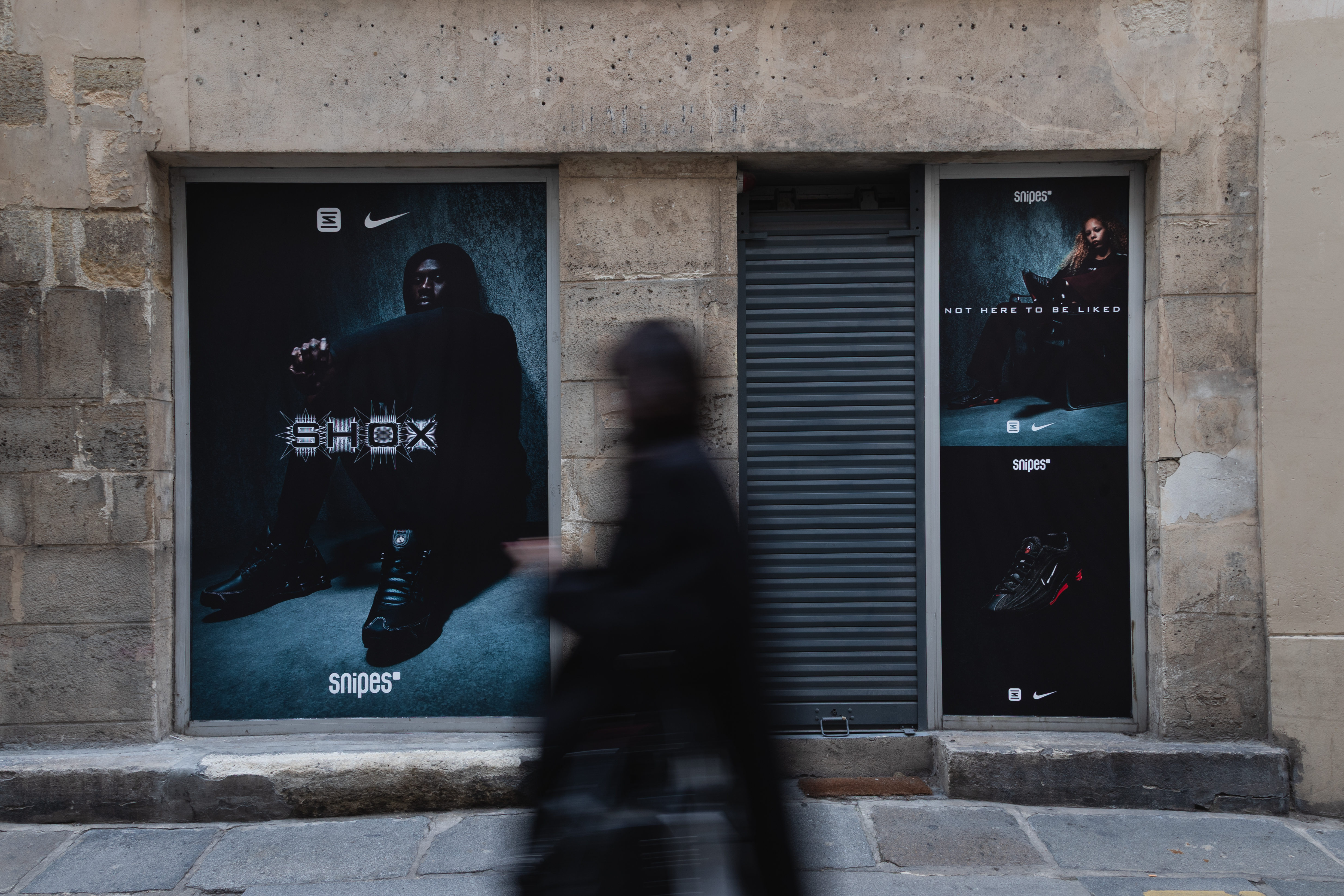
Large formats like that Paris wall are getting an article of their own soon.
A city take over points every option above at a single date.
In May 2022 Eintracht Frankfurt reached the Europa League final and wanted its own city behind the team. A1 posters went up across Frankfurt. Chalk stencils went down on the pavements. At nightfall two of our crew walked the streets with projectors, while a bigger projection lit up the front of a building. Right after the match, everything came down.

Paper held the day. Light took over at night. The pavement caught everyone in between. A take over works because each format covers the hours the others can’t.
| Option | Use it when you want to |
|---|---|
| Posters | Fill a district around a launch, a drop or an event |
| Stickers | Reach people up close, between the poster sites |
| Projection | Make a moment after dark, at short notice |
| Green graffiti | Put a message on the pavement that fades within a week |
| Booked out of home | Hold a guaranteed site for a long run, with reporting |
| City take over | Own a whole city around one date |
Most campaigns end up using two or three of these. That’s fine. Start from the goal and the right mix tends to follow.
Back in the nineties, the crew knew that container took sixteen. Knowing that was the job.
It still is. Every brief we get starts with something a brand wants to happen, and that goal picks the surface. Bring us the plan. We’ll find the wall.
This is the last part of the series. It started with a complaint about posters in 1875 and ends on a pavement in London, a building front in Barcelona and a glass container in Amsterdam that took exactly sixteen sheets.
The streets are yours.
Part one: where guerrilla marketing came from
Part four: the deal behind the billboard
The glass container and the sculpture, the 1980s kit and the 1948 method: Serge Markx, Verboden aan te plakken. Over legale en illegale affichage, Amsterdam, 1996, pp. 11, 19 to 20 and 63. The peperbus: same, p. 57.
Défense d’afficher: the French law on the freedom of the press of 29 July 1881, which regulates advertising on public roads.
Stippling and slatted hoardings: The Control of Fly-posting: a Good Practice Guide, UK government, November 2000, section 6.6.
Campaigns: Paper Trails case pages for Aligne, Icelandair, FC Barcelona, Nike Run Club, Nike x Snipes and Eintracht Frankfurt.
Images. The peperbus on the Keizersgracht, around 1940: Collectie Stadsarchief Amsterdam, Archief van het Bureau Monumentenzorg, file 012000007783. All other photographs Paper Trails. Campaign creative belongs to the brands shown.
Two ways to buy the same digital screen. We compare direct and programmatic buying, what they cost, and when to pick which.
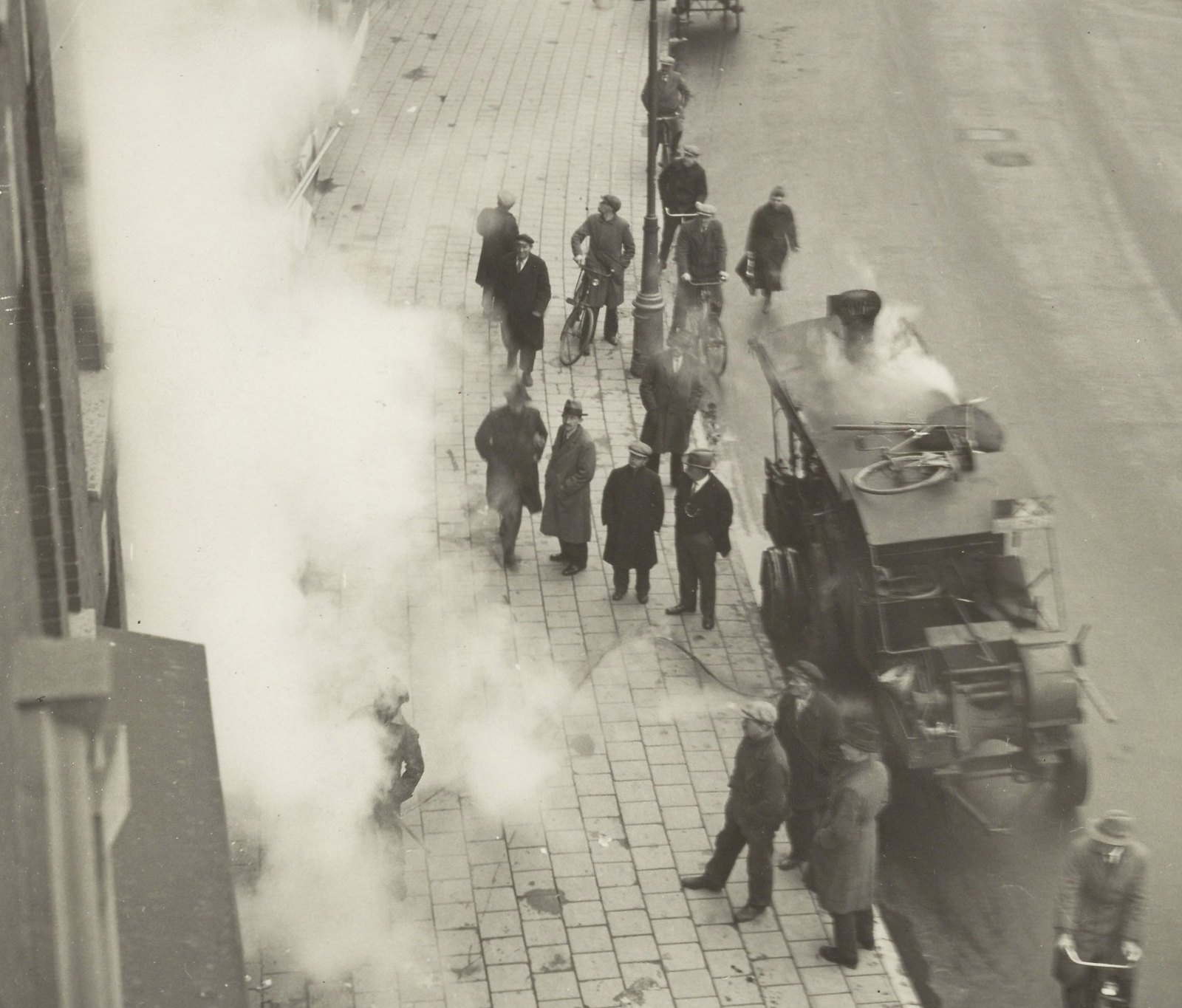
Every campaign we put up gets photographed. For different reasons. Discover what those pictures are for.
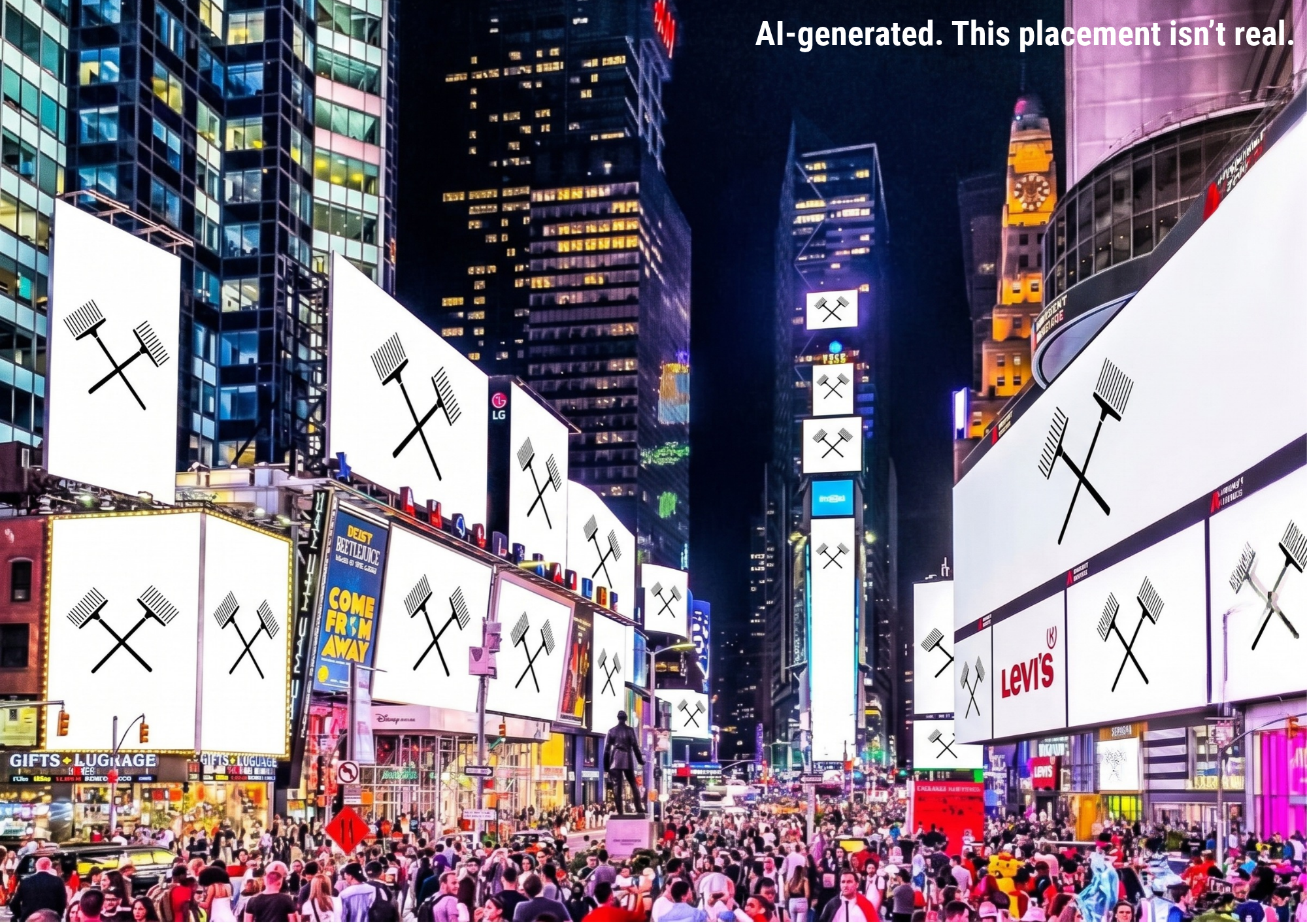
CGI ads that never existed, built on people not being sure. Now the law says you have to tell them. Real for proof, fake for reach.
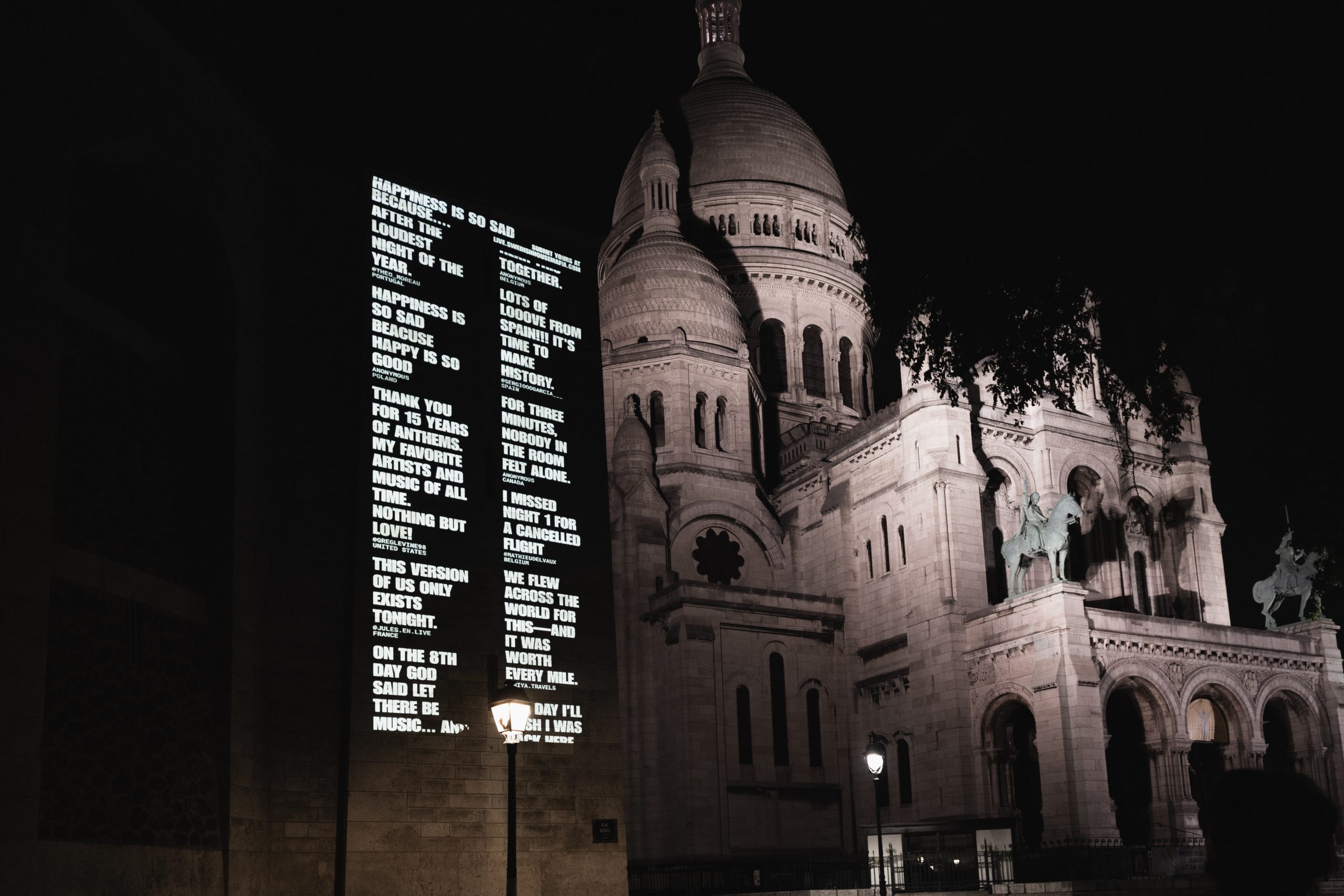
A logo on a building is just the warm-up. What a projection can do with place, sound and live interaction, and a silent disco idea for music clients.
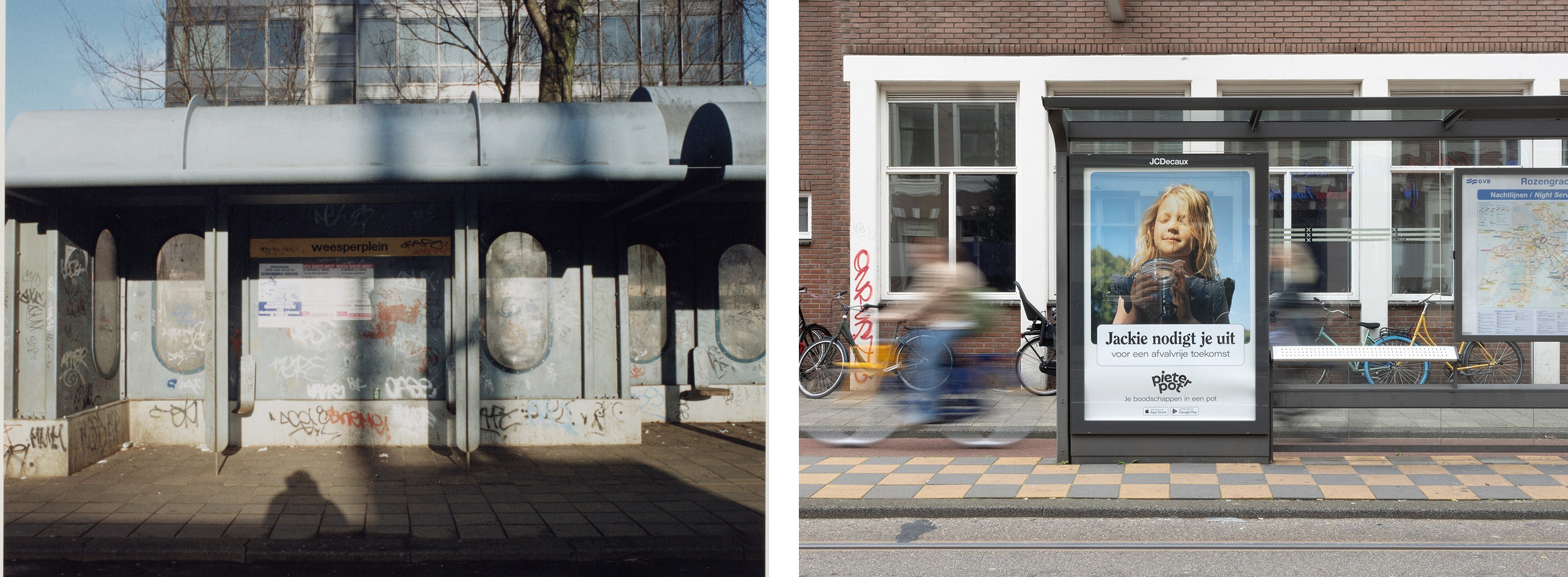
A bus shelter arrives in a city and the city pays nothing for it. Who owns the furniture, what each route costs, and why almost no city will tell you what it earns.
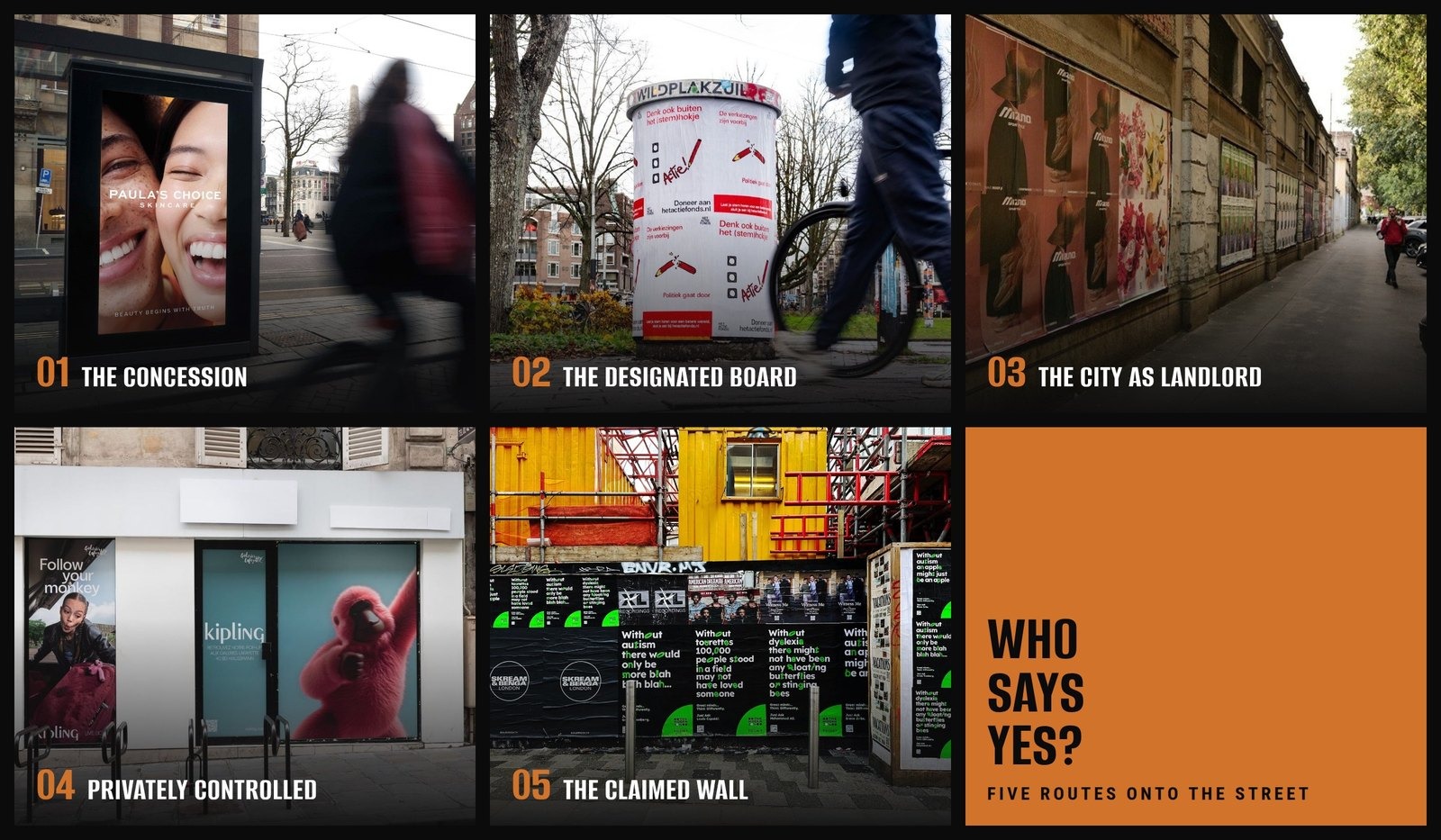
Five ways onto a street, and only four involve somebody saying yes. Who owns the surface, who to ask, and who pays when nobody did.
Two Amsterdam poster crews went to war over walls neither of them owned. And then, one of them got a licence from the authorities.

Guerrilla marketing was named in 1984. Amsterdam archives show us the trade is a century older. From an 1875 complaint to a wall for rent in 1915.