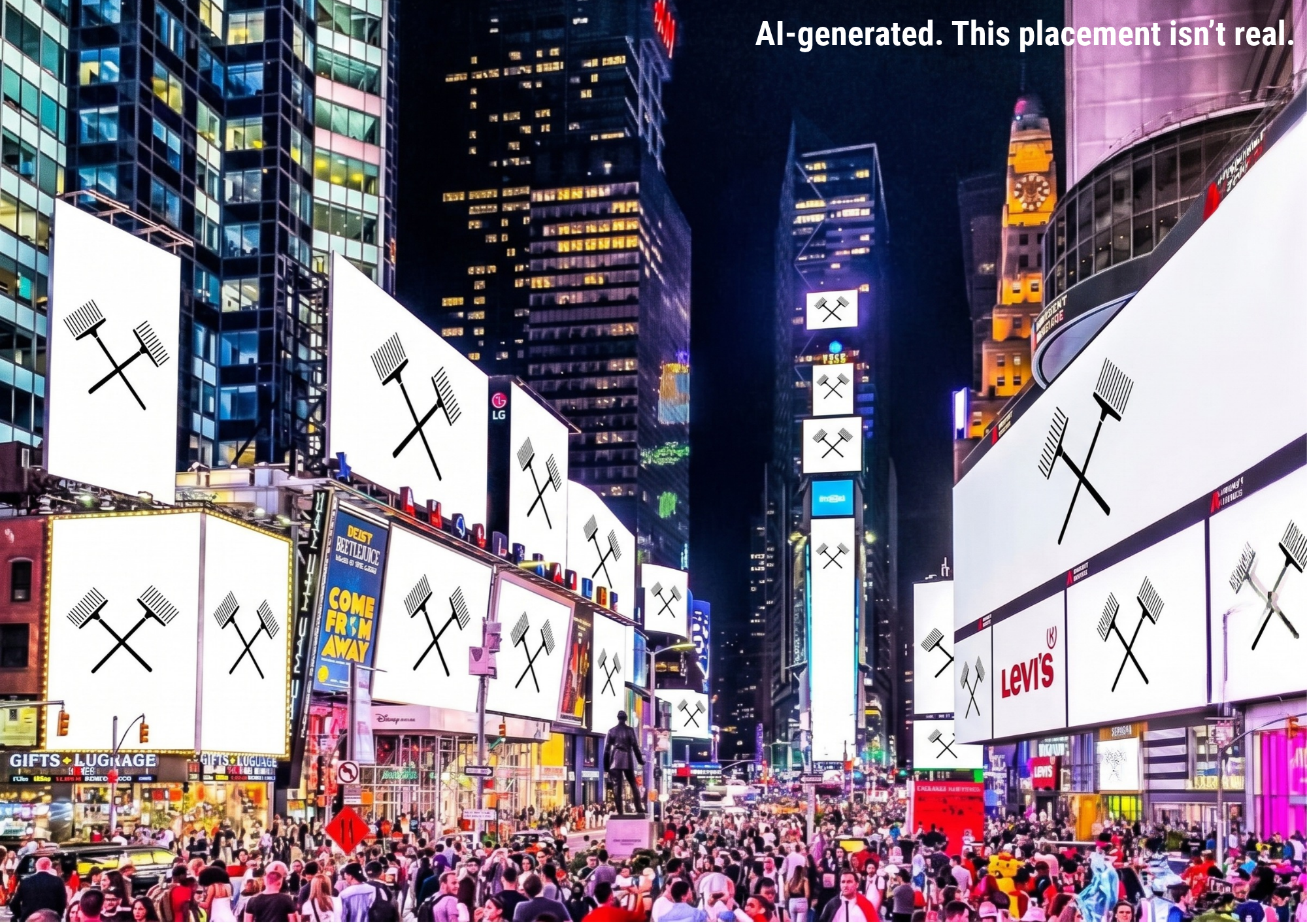
Faux OOH just got a rulebook. Now what?
CGI ads that never existed, built on people not being sure. Now the law says you have to tell them. Real for proof, fake for reach.
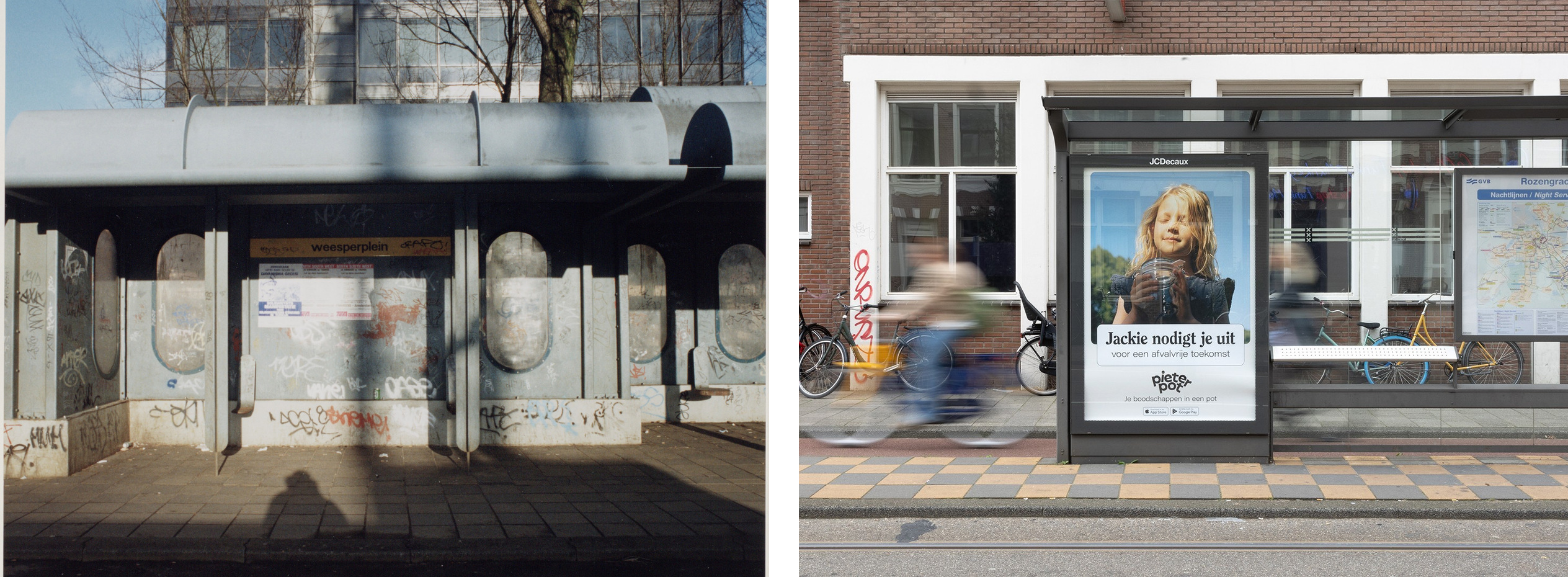
Two shelters.
The first one is in an Amsterdam archive. Tagged end to end, the glass gone milky, somebody’s gig poster jammed into the advertising frame where it does not belong. The second one is on a street corner now. Clean, lit, a charity campaign behind glass, a route map bolted on beside it, a bench nobody has had to repair this year.
An advertising company paid for the difference. The arrangement that paid it back is the one you join when you book a panel.
In 1996 Jocelyn Brouwer, a director of Publex, which was then the giant of Amsterdam outdoor advertising, described the business in one sentence to a researcher writing a book about posters:
“Het is een uitvinding van Decaux zelf, het schenken van bushokjes in ruil voor reclame. Onderhoud, reparatie en schoonmaak doet het bedrijf, de gemeente krijgt ze kosteloos in bruikleen.”
Giving cities bus shelters in exchange for the advertising. The company does the maintenance, the repairs and the cleaning, and the city gets the furniture on free loan.
Twenty-two years later, in February 2018, René Witzel, then general manager of JCDecaux Netherlands, said the same thing to Het Parool without being asked anything clever:
“Wij leveren alle bushokjes en doen ook het onderhoud. En in ruil daarvoor krijgen wij reclameruimte.”
We supply all the shelters and do the maintenance. In return we get advertising space.
One description from a competitor looking in, in 1996. The same description from the incumbent, in 2018, as the ordinary way to explain his business to a newspaper. That is the standing structure of the European street, and it has not moved in either direction since.
Jean-Claude Decaux put the first advertising bus shelter on a street in 1964 and Lyon was the first city to take the model. Brussels followed in 1966, Lisbon in 1971, Hamburg in 1982. By the time any of us started buying media it had been the default for a generation.
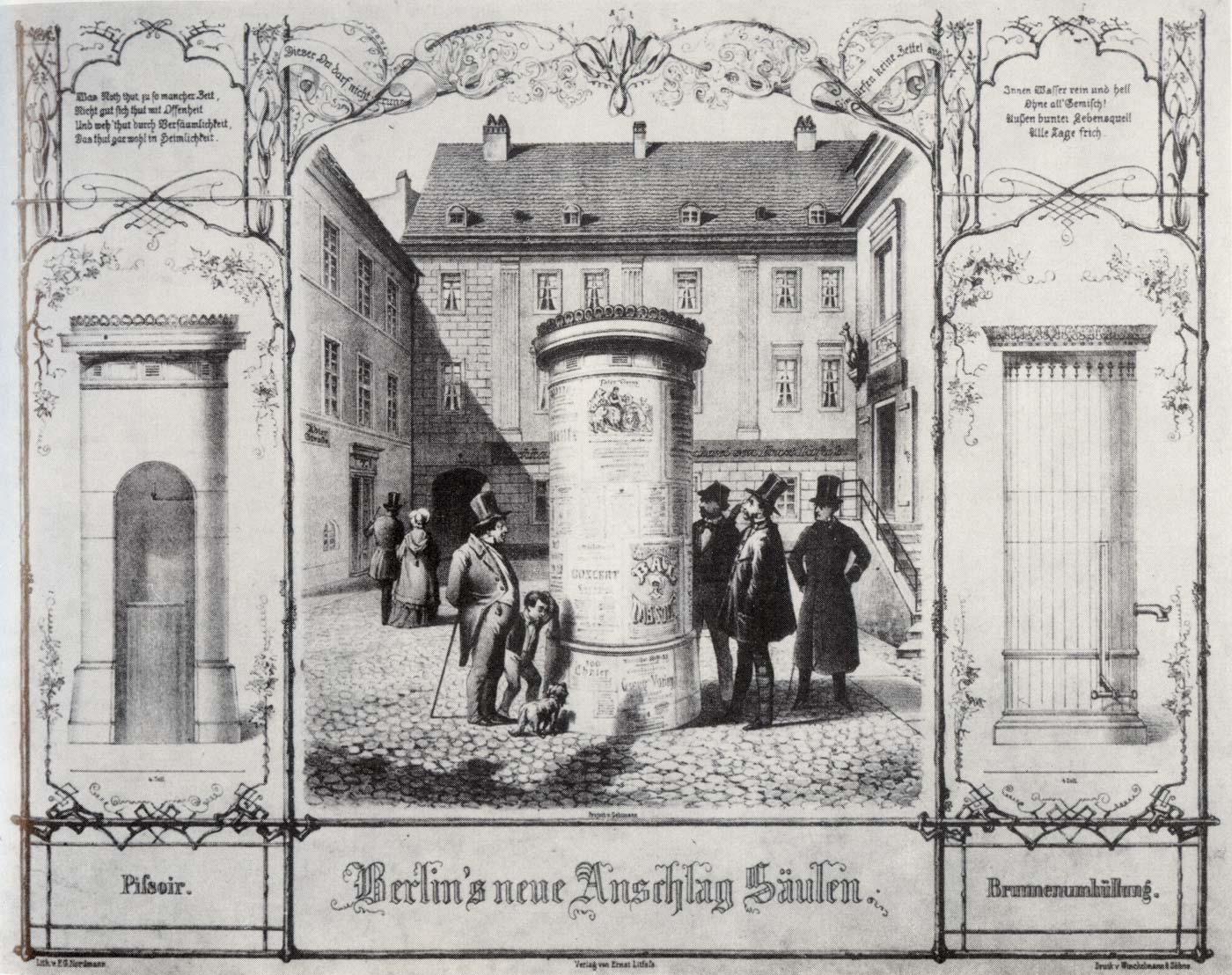
Though it was not new in 1964. In December 1854 the Berlin police granted Ernst Litfaß the exclusive right to install and run 150 advertising pillars for fifteen years. He supplied them at his own cost, a third of them conversions of existing pumps and public conveniences, and at the end of the term the pillars became the authority’s property. Paris did the same thing fourteen years later. In August 1868 the city awarded the printing house Morris père et fils a fifteen-year monopoly on 150 columns, built at the company’s expense and reserved for theatre bills.
Free furniture, an exclusive term, and the hardware reverting to the city at the end. JCDecaux won the Paris column concession again in 2019, for eight years and around 550 columns, and that contract also ends with the furniture becoming the city’s property. The object changed. The clause did not.
We sell both routes, under different labels, in different countries. Each side wins on the counts the other loses.
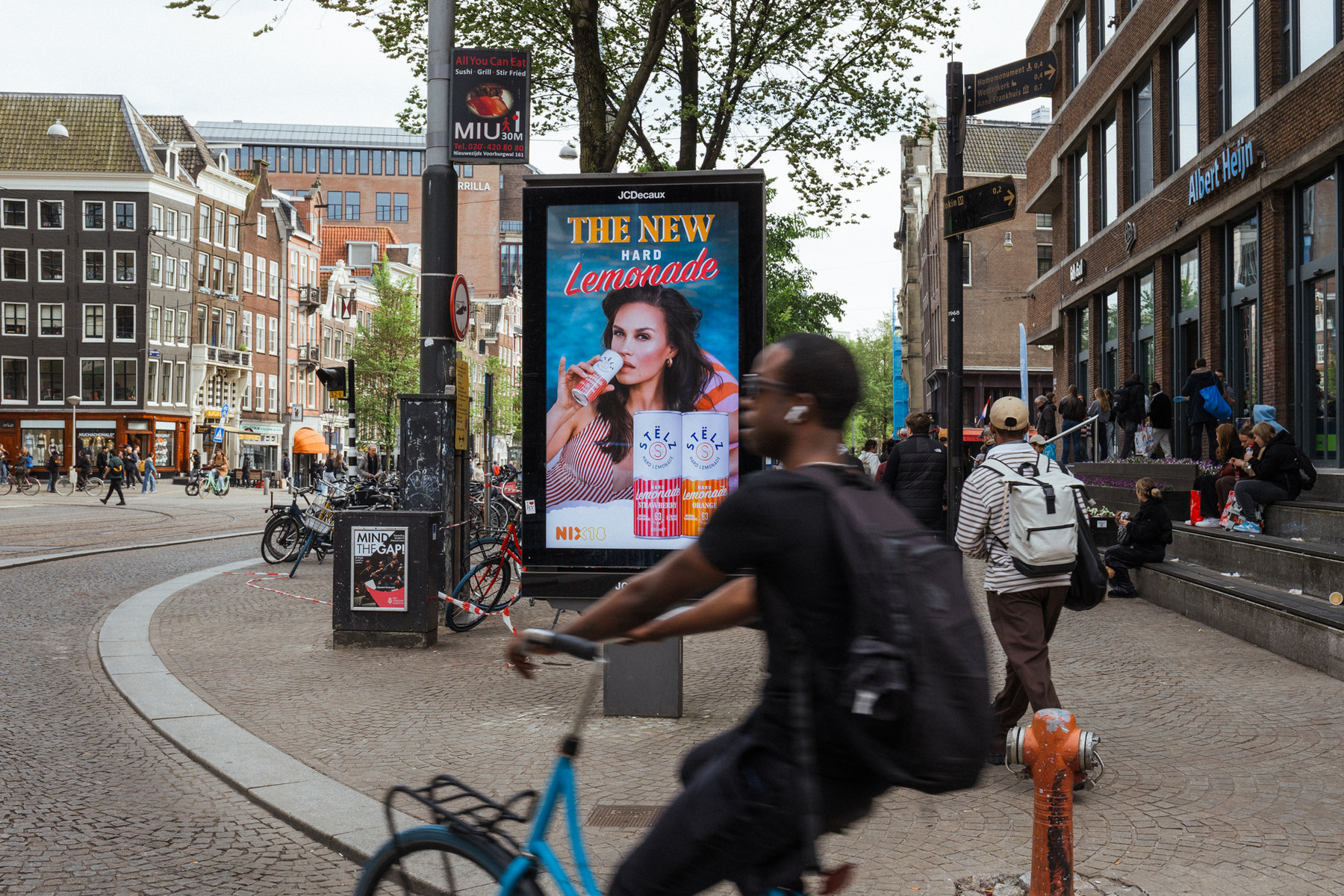
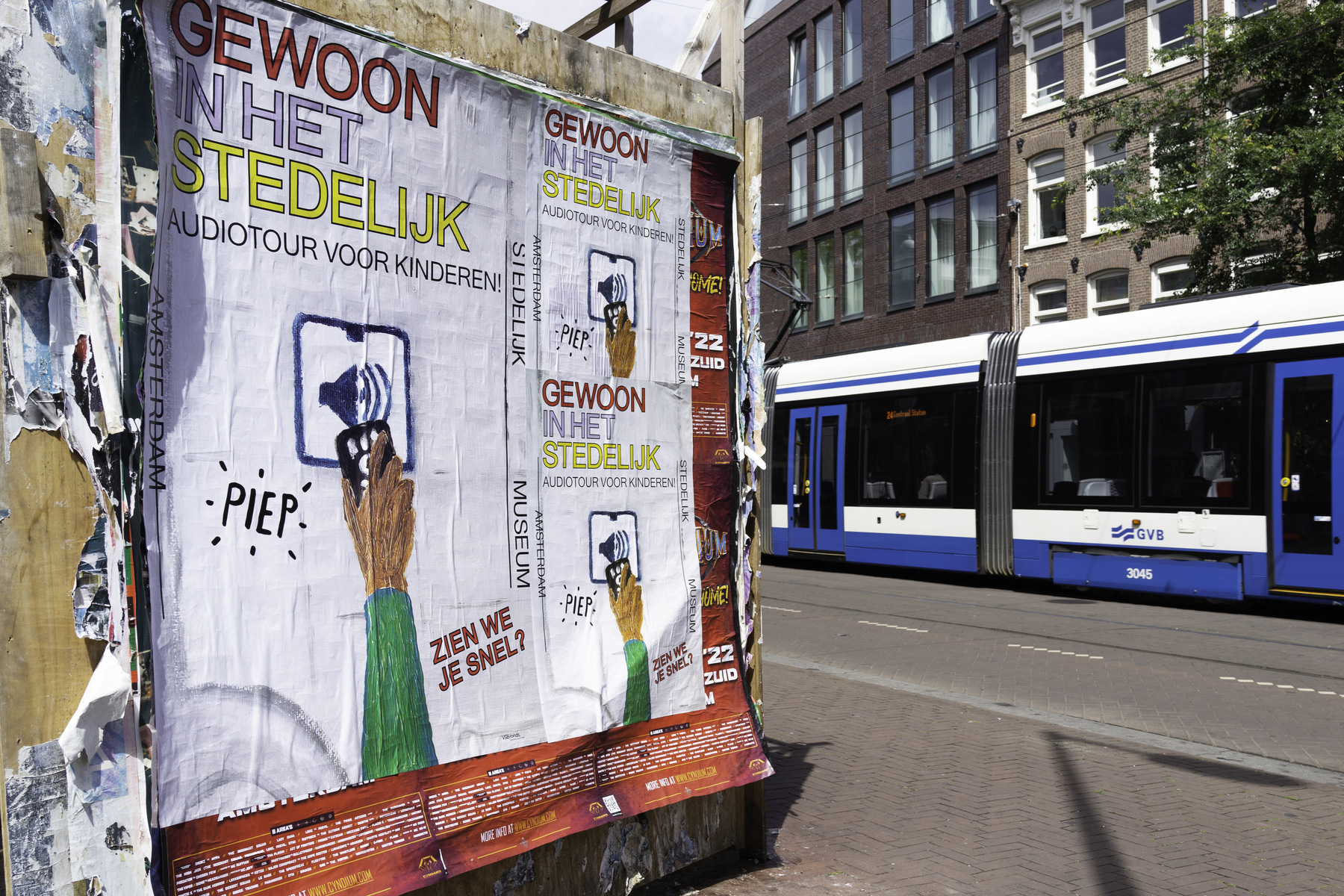
| Booked out of home | The street route | |
|---|---|---|
| What you are buying | A place inside a concession | Volume on surfaces nobody has consolidated |
| Entry cost | High, and set before you arrived | Lower, and set by the job |
| Lead time | Weeks to months, against a fixed estate | Days |
| Where it goes | Wherever the operator chose to put its objects, years ago | Where the campaign needs it |
| Format | Whatever fits the housing | Whatever you can paste |
| Certainty | High. You know what you get | Lower, and it varies by city and by week |
| Who judges the work | The operator, before it goes up | Enforcement afterwards, aimed at who pasted it and who paid for it |
On the authorised route somebody reads your artwork before it goes up and can decline it. On the street route nobody reads it first, and what replaces that is liability afterwards, aimed at the act of pasting rather than at the message. A Dutch municipality goes after the party whose campaign it is, under the local bylaw, with a penalty payment attached. France issues an administrative fine per poster and serves the removal order on the party the advertising was made for. English planning law deems the advertised business to be the one displaying the poster, with a defence available if it can show it took reasonable steps.
Content rules do not map onto that neatly, and the honest answer changes from market to market. The UK advertising code covers posters in public places except where they appear unlawfully, and the regulator sends those complaints to trading standards rather than ruling on them. The Dutch code is drafted the other way round and claims to cover all advertising whatever the medium was used, although we have not been able to find a published Reclame Code Commissie decision about a wild-posted poster, and the Commission has no power to fine anyone in any case. It recommends, and it publishes. A good deal of what goes up on walls is not advertising in the codes’ own terms anyway. Statutory bans are the exception and they travel with the poster regardless: Dutch tobacco law prohibits every form of advertising, with no qualifier about the medium and none about where it was pasted.
So on this count the comparison runs prior approval against a patchwork, in which the body most likely to come after you is a council enforcement officer, and the question being asked is who put it there and who paid for it.
One thing about the first of those. A concession operator applies its own acceptance standards on top of whatever the city wrote into the contract. Those standards are not published anywhere a planner can read them in advance. Most advertisers meet them for the first time when a layout comes back.
What does your city earn from the advertising on its own pavement?
In most of Europe you cannot find out.
Paris is the exception, because the paperwork is public. When the city re-let its information furniture in early 2025 the Conseil de Paris published the deliberation, and the deliberation publishes both bids. The winner offered the city 64 per cent of the advertising revenue in year one. The losing bid offered 54. Ten percentage points of everything that street earns, sitting between two companies bidding for the same pavement, written down by the buyer.
Now try anywhere else.
Glasgow’s committee awarded a ten-year contract across hundreds of shelters and recorded in the papers that the guaranteed payment could not be included, because the bid was commercially sensitive. Cologne publishes its entire street furniture contract, clause after clause, and the clause about money is empty. Copenhagen is more straightforward: there is no share at all, the operator keeps what the advertising earns, and that has been the arrangement since the nineties.
So the spread is real and mostly invisible. A handful of English councils publish a percentage and the figures run from a fifth of revenue down to a tenth, and the Office of Fair Trading’s 2011 market study found a number of authorities taking a nominal rent or no revenue at all. Everywhere else it is a flat annual fee if you are lucky and a redaction if you are not.
None of which is a scandal. Commercial contracts get redacted. It does mean that when somebody calls out of home the transparent, accountable, measurable half of the media market, they are describing the audience numbers rather than the deal underneath them.
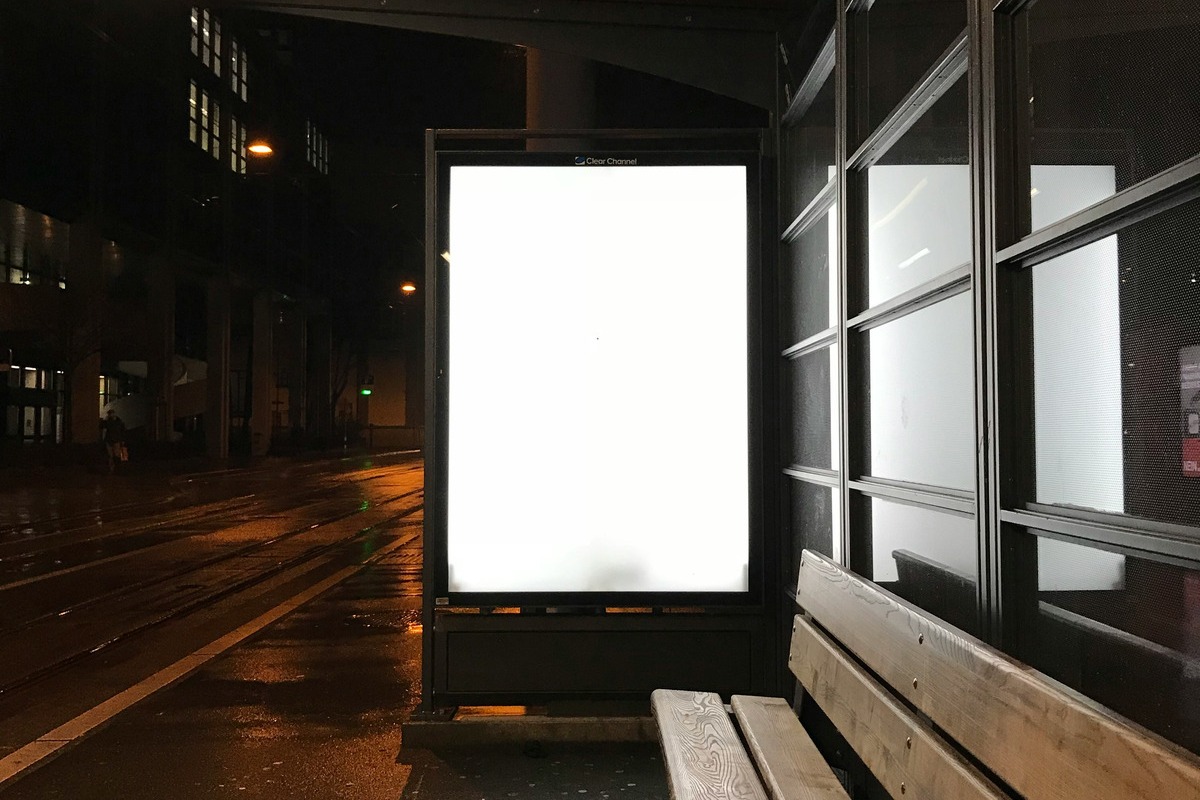
Under a classic street furniture concession, the operator owns the shelters. It paid for them, installed them, cleans them, and takes them away at the end if it loses. That is why these contracts run for fifteen and twenty years. Nobody puts that much hardware into the ground against a three-year deal.
Münster changed supplier in 2024. The incumbent lost, the city did not buy the existing furniture, and more than four hundred shelters came out of the ground at the outgoing operator’s expense. Most of them could not go anywhere else, because the design had been drawn for that city.
Oslo went the other way. The city’s transport company wanted the shelters handed over free of charge when the contract ended. JCDecaux looked at that clause and declined to bid at all, after years in the city. The furniture was the asset, and being asked to give it away changed what the contract was.
That is the norm rather than a quirk. When the Office of Fair Trading went through a sample of British contracts in 2011 it found that the very large majority left the furniture as the media owner’s property at the end of the agreement.
Then there is London, running the opposite model entirely. Transport for London owns its bus shelters outright, several thousand of them, and sells only the advertising on top. Gloucestershire owns roughly half its shelters and the operator owns the other half, inside one county. The OFT’s recommendations to councils the following year put that split on the table as an option: the authority takes ownership of the furniture and contracts for the maintenance and the advertising separately. Warwickshire was the example it gave.
There is no single European model, and anyone telling you otherwise has worked in one market. What there is, is a question to ask before planning anything with a long horizon. In this city, does the advertising pay for the furniture, or does the city own the furniture and sell the space? The answer tells you how fast anything can change, who has leverage, and what happens at the end of the term.
Concessions are litigated constantly. The fights are about procurement rather than about advertising, which is why they stay out of the trade press and out of everyone’s planning.
In 2017 two rival operators took Paris to court over the city’s street furniture tender and won. The city’s own local advertising rules were stricter than the national code, and the tender had been written to the looser standard. The Conseil d’État confirmed it that September. Paris then handed the incumbent a provisional contract without competition, and the courts killed that too, holding that only the continuity of the city’s information service could justify such a thing and that the city’s financial interest could not. More than sixteen hundred advertising units came off the street.
One of the companies that brought the case won the replacement contract. It has held it ever since, through a change of owner and a change of name.
Lisbon is the same kind of dispute with the opposite result, and the opposite result cost the city just as much time. The old contracts expired around 2015. The replacement went to tender in 2017, the first winners were excluded, it was re-decided, cleared by the competition authority on conditions, and the contract was finally approved in late 2022. Challengers went to court repeatedly and lost. Roughly eight years between the old furniture falling out of contract and the new furniture going in, with the incumbents running on extensions throughout.
Win or lose, a challenge to a concession takes years, and for those years the inventory you planned against is somebody’s exhibit.
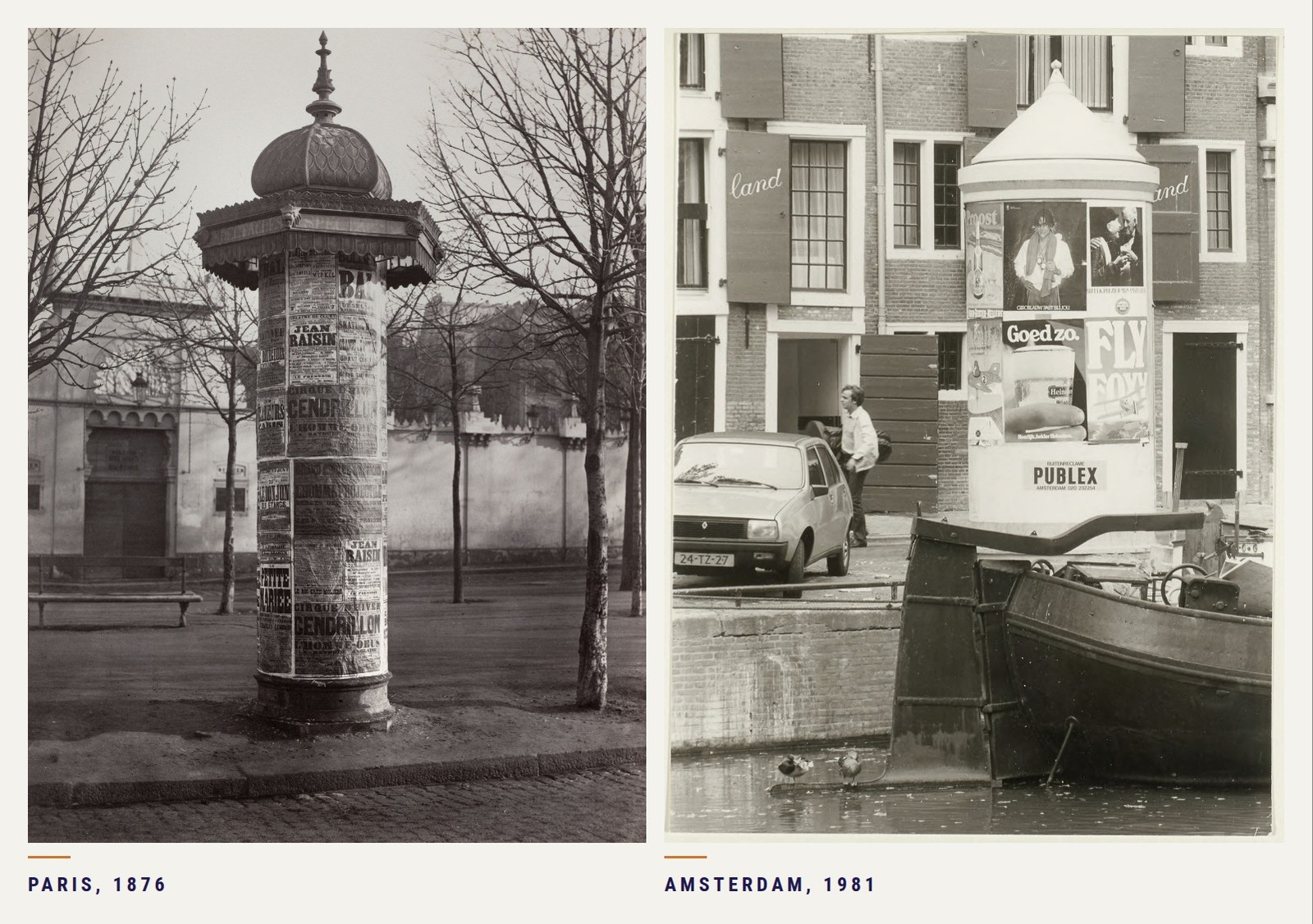
The name on the shelter is different in every country. Behind the names, the list is short. Publex in the Netherlands became JCDecaux. Wall in Germany has belonged to JCDecaux since 2009. AFA JCDecaux is Denmark. IGPDecaux is Italy, and it took over Clear Channel’s Italian business, a deal the Italian competition authority cleared in 2024. That decision set out who owns the buyer, which is how we know IGPDecaux is sixty per cent JCDecaux, held through two companies. The same group moved to buy Clear Channel’s Spanish business, the competition authority opened a second-phase investigation into what that would do to public street furniture tenders, and the buyer walked away rather than accept remedies. In France, Clear Channel sold its own subsidiary in 2024 and it trades under a new name now.
We have a photograph from 1981 of an Amsterdam advertising column with PUBLEX printed across it. The company somebody was pasting around forty-five years ago is the company holding the contract today, under a different name, in more countries.
Consolidation is what happens to capital-intensive businesses with long contracts and high switching costs. The shape of the deal makes it close to inevitable.
Transport for London restricted advertising for food high in fat, salt and sugar across its estate from February 2019. A controlled study published in PLOS Medicine in 2022 found London households bought meaningfully less energy from those products than the counterfactual, with the largest effect in chocolate and confectionery. The restriction was predicted to cost TfL serious money. TfL’s own advertising revenue went up over the period, though TfL says plainly it cannot attribute that either way, and the industry has since published a methodological challenge to the study. It is a contested field with research on both sides, and it is going to keep moving.
Paris did something quieter and more drastic. The 2025 contract caps advertising at a quarter of the faces in year one and a tenth in year two, against half under the previous deal. No ban, no bylaw, no vote about categories. The city cut the commercial inventory on its own furniture to a fifth of what the old deal allowed, by writing it into a procurement document.
Amsterdam went through the bylaw instead. The council passed a ban on advertising for fossil fuels, flights, gas and grey electricity contracts, cruises, combustion vehicles and meat in January 2026. It took effect on 1 May 2026. In May the city said it would not enforce during 2026 and that enforcement starts on 1 January 2027, to give the concession holders a year. The alderman responsible had argued against the bylaw route throughout, on the grounds that it would collide with contracts already running.
And it does not always go one way. Geneva voted a commercial poster ban into its city rules and then its own voters rejected the implementing regulation in March 2023, by a hair. A Hamburg citizens’ initiative aimed at large digital screens failed to reach the signature quorum in May 2025. In July 2026 the administrative court in Lyon struck down parts of the metropolitan advertising rules, including the format caps, while leaving the night switch-off standing.
For a plan, the questions are narrower than the headlines. Which inventory does the restriction actually cover? Sheffield’s policy, for example, applies to the council’s own advertising estate, and the city’s bus stop advertising is controlled regionally rather than by the council, so it sits in a different conversation entirely. When does it start, as against when it was voted? And who gets to amend it, under a contract signed how long ago?
An advertiser in one of those categories planning 2027 has a scheduling problem and a creative problem, in cities where the rules were written by people they have never met, inside contracts they had no part in.
In June 2019 Joris Duindam, then strategy manager at JCDecaux Netherlands, told Het Parool:
“Er bestaat in steden een dringende behoefte om te communiceren. Die is niet met regelgeving uit te bannen. Mensen plakken van oudsher plakkaten en mededelingen op muren en bomen. Ik zie het als onze taak die behoefte te kanaliseren.”
Cities have an urgent need to communicate, it cannot be legislated away, people have always pasted bills on walls and trees, and he sees it as his company’s job to channel that need. That is the licensed end of the market describing why both routes exist.
So: two shelters, one street, two completely different purchases.
One of them buys a place inside an arrangement a city and an operator built years ago, with reach and permanence and certainty attached, and somebody else’s rules riding along. The other buys speed and volume and the ability to put the work where the campaign needs it, with less certainty and a different risk sitting on a different desk.
Most real campaigns use both, whether or not anyone planned it that way. Planning it deliberately is the job, and it is the conversation to have before the format is chosen rather than after.
We run both. Come to us with the plan rather than with a format.
Part one on where guerrilla marketing came from. Part two on the Amsterdam poster war. Part three on the five routes onto a street and who has to say yes to each of them.
Next: why we photograph every campaign, and what each format is actually for. We’ll keep you posted 😉
The two Paris bids, the 64 and 54 per cent revenue shares, and the cap on advertising faces falling from a half to a quarter to a tenth: Stratégies, reporting Conseil de Paris délibération 2025 DFA 02.
Local authorities receiving a nominal rent or no revenue at all, and the finding that the very large majority of sampled contracts leave the furniture as the media owner’s property: Office of Fair Trading, Outdoor advertising, an OFT market study, OFT1304, February 2011, paragraphs 3.96 and 3.88.
The option of a council taking ownership of the furniture and contracting separately for maintenance, and the Warwickshire example: Office of Fair Trading, Street furniture advertising, recommendations to local authorities, OFT1415, May 2012.
IGPDecaux taking sole control of Clear Channel Italia, and the shareholding that makes it sixty per cent JCDecaux: AGCM case C12583, provvedimento 31062, 13 February 2024. The group announcement: JCDecaux, 30 May 2023.
The 2017 annulment of the Paris street furniture tender and of the provisional concession that followed it: Conseil d’État nos. 410336, 410337, 410364 and 410365, 18 September 2017, and n° 416581, 5 February 2018.
The Lisbon concession, its terms and the dismissal of the injunction against it on 31 March 2023: Boletim Municipal n.º 1492, 22 September 2022, carrying the contract minuta and Deliberação n.º 500/CM/2022.
The 1996 description of the trade by Jocelyn Brouwer of Publex, quoted by a researcher writing on posters, and the restatements by JCDecaux Netherlands in Het Parool, February 2018 and June 2019.
Wall belonging to JCDecaux since 2009: JCDecaux release of 15 September 2009, recording the purchase of the founder’s stake and a holding of 90.1 per cent.
The Transport for London restriction on advertising for food high in fat, salt and sugar, in force 25 February 2019, and the controlled study of its effect: Yau et al., PLOS Medicine 19(2):e1003915, 17 February 2022. The methodological challenge to that study was published in May 2022 by SLG Economics, commissioned by ISBA, the Advertising Association and Outsmart.
The Amsterdam bylaw on fossil fuel, flight, cruise, combustion vehicle and meat advertising, in force 1 May 2026 with enforcement from 1 January 2027; the Geneva vote of 12 March 2023 rejecting the implementing regulation; the Hamburg citizens’ initiative that failed to reach its signature quorum in May 2025; and the Lyon administrative court ruling of July 2026: municipal and court records, listed in full in the project file.
Images. Hero, Collectie Stadsarchief Amsterdam and Paper Trails. The two columns, Charles Marville, Musée Carnavalet, Histoire de Paris, CC0 Paris Musées, and Collectie Stadsarchief Amsterdam. The Zürich shelter, Patrick Robert Doyle, Unsplash. The booked panel and the hoarding, Paper Trails. Campaign creative belongs to the brands shown.
CGI ads that never existed, built on people not being sure. Now the law says you have to tell them. Real for proof, fake for reach.
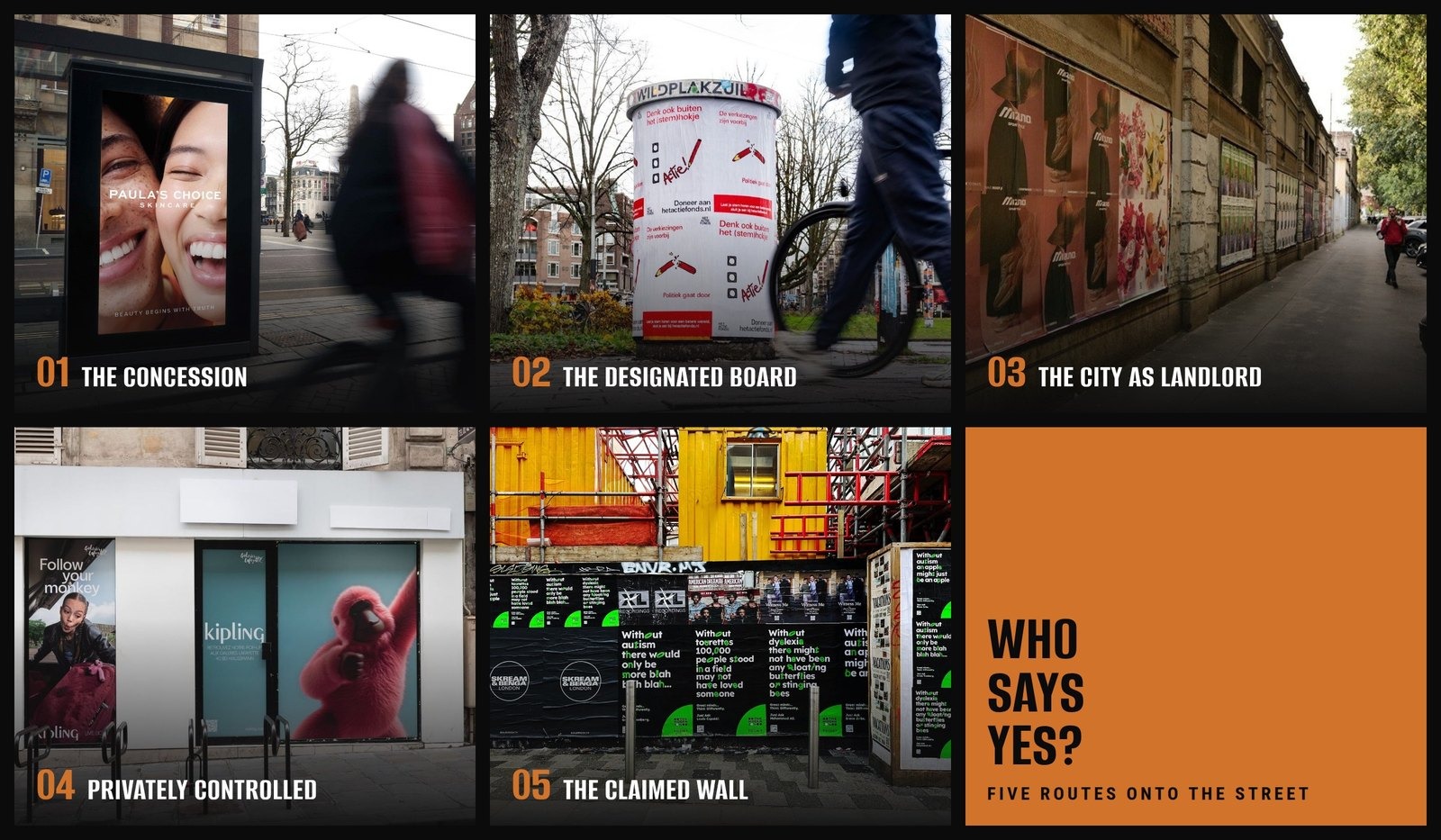
Five ways onto a street, and only four involve somebody saying yes. Who owns the surface, who to ask, and who pays when nobody did.
Two Amsterdam poster crews went to war over walls neither of them owned. And then, one of them got a licence from the authorities.

Guerrilla marketing was named in 1984. Amsterdam archives show us the trade is a century older. From an 1875 complaint to a wall for rent in 1915.
Reverse graffiti, green graffiti, chalk stencils: clients mix them up all the time. Here is what each technique is, how long it lasts, and how to brief correctly.
MOJU, Le Smash and JUNI all prove the same thing: the right streets make a small brand impossible to miss. Here's how each one did it.
Three brands, three special builds, one same result: people stopped, looked twice, and remembered it. Here's what makes a special build worth stopping for.
Every new market comes with its own rules, its own risks, its own learning curve. Here's what it actually takes to make it work, city by city.