Alternative media #
OOH formats and executions outside the core standardised inventory, often including ambient, experiential, mobile OOH and custom media. What counts as alternative varies by market.
 PAPER TRAILS
BRAND VOCABULARY
The A to Z of guerrilla, out-of-home and brand activation jargon, with Dutch and international variants side by side.
No terms match that search.
The big-picture words that define the field and get used loosely in briefs.
OOH formats and executions outside the core standardised inventory, often including ambient, experiential, mobile OOH and custom media. What counts as alternative varies by market.
Advertising that uses an existing environment, object or context as part of the message, often in an unexpected way, for example stairs, floors or street fixtures.
Creating an association between a brand and an event, team or sponsorship property without being an official sponsor, often through nearby activity or timely creative.
See Section 08, Brand activations and experiential, for the canonical definition.
The Dutch umbrella term for out-of-home advertising: media designed to reach people while they are away from home, including street, transit, place-based and digital formats.
Non-digital OOH formats in which the creative stays fixed for a period, including printed posters, billboards and street furniture.
Combining online and out-of-home advertising so the two channels reinforce each other for greater reach.
Marketing that directly engages people in a branded experience and invites participation rather than passive viewing.
Unconventional marketing designed to create disproportionate attention through surprise, creativity, context or unusual placement. Guerrilla campaigns can be permitted or unpermitted, and may be low-cost but do not have to be.
The combination of channels and formats a campaign runs across, chosen so the message compounds across touchpoints.
Advertising media specifically designed to reach people while they are away from home, including billboards, posters, street furniture, transit, place-based media and digital OOH.
OOH positioned in or around specific environments where a particular audience congregates, for example gyms, cinemas, bars, stadiums, campuses or offices.
A single, attention-grabbing event staged specifically to earn press and social coverage.
Marketing carried out in streets and public spaces, typically for direct visibility or interaction with pedestrians and local crowds. It can include guerrilla tactics, sampling, wild posting and activations.
Marketing designed to encourage rapid person-to-person sharing, particularly through digital and social channels. Street stunts are sometimes built with viral amplification in mind.
The core techniques: what actually gets deployed on the pavement, the wall and the building.
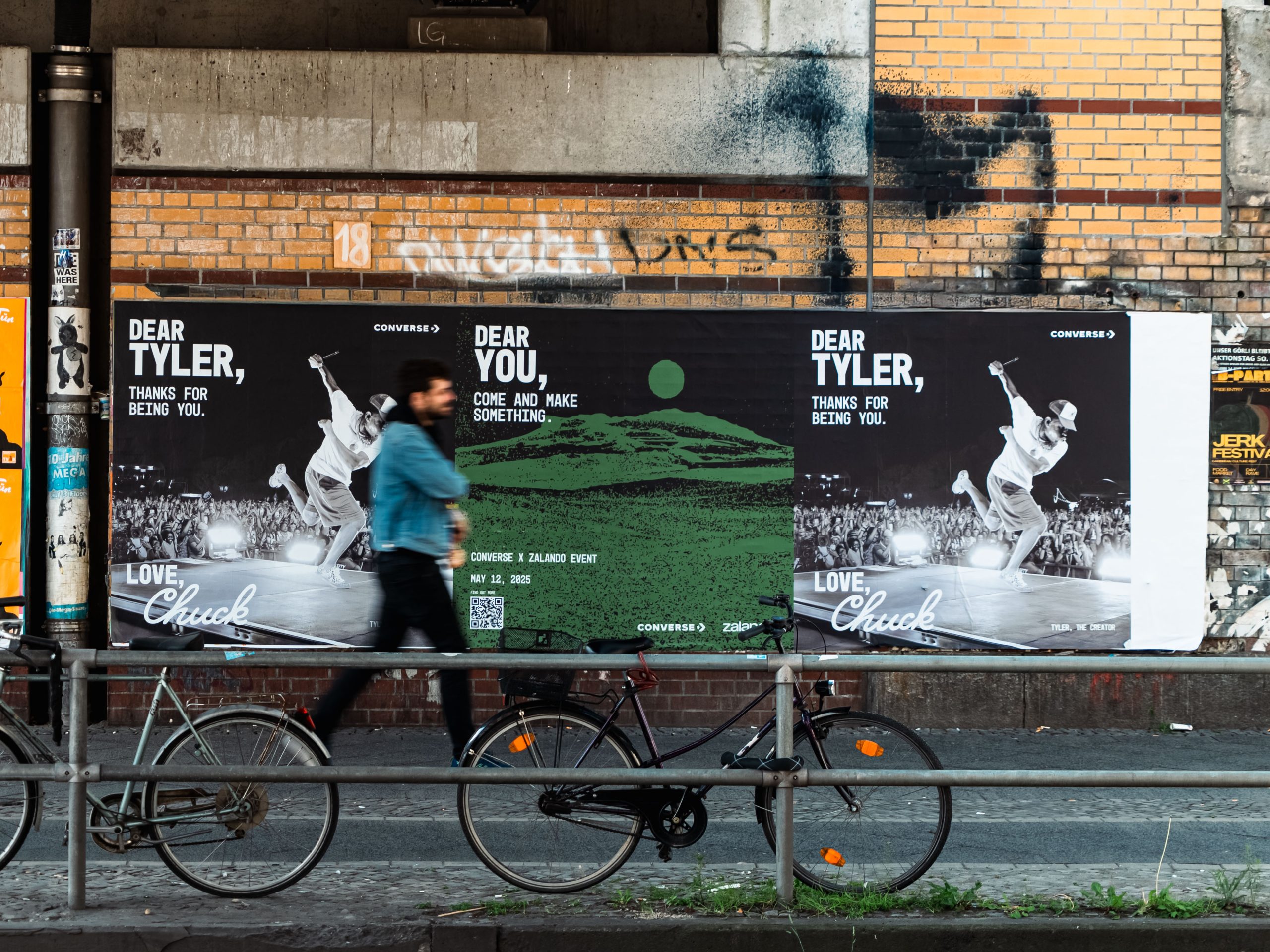
Poster placement on sites where the necessary owner or operator permission and any applicable consents are in place. It may be paid media inventory or another approved placement.
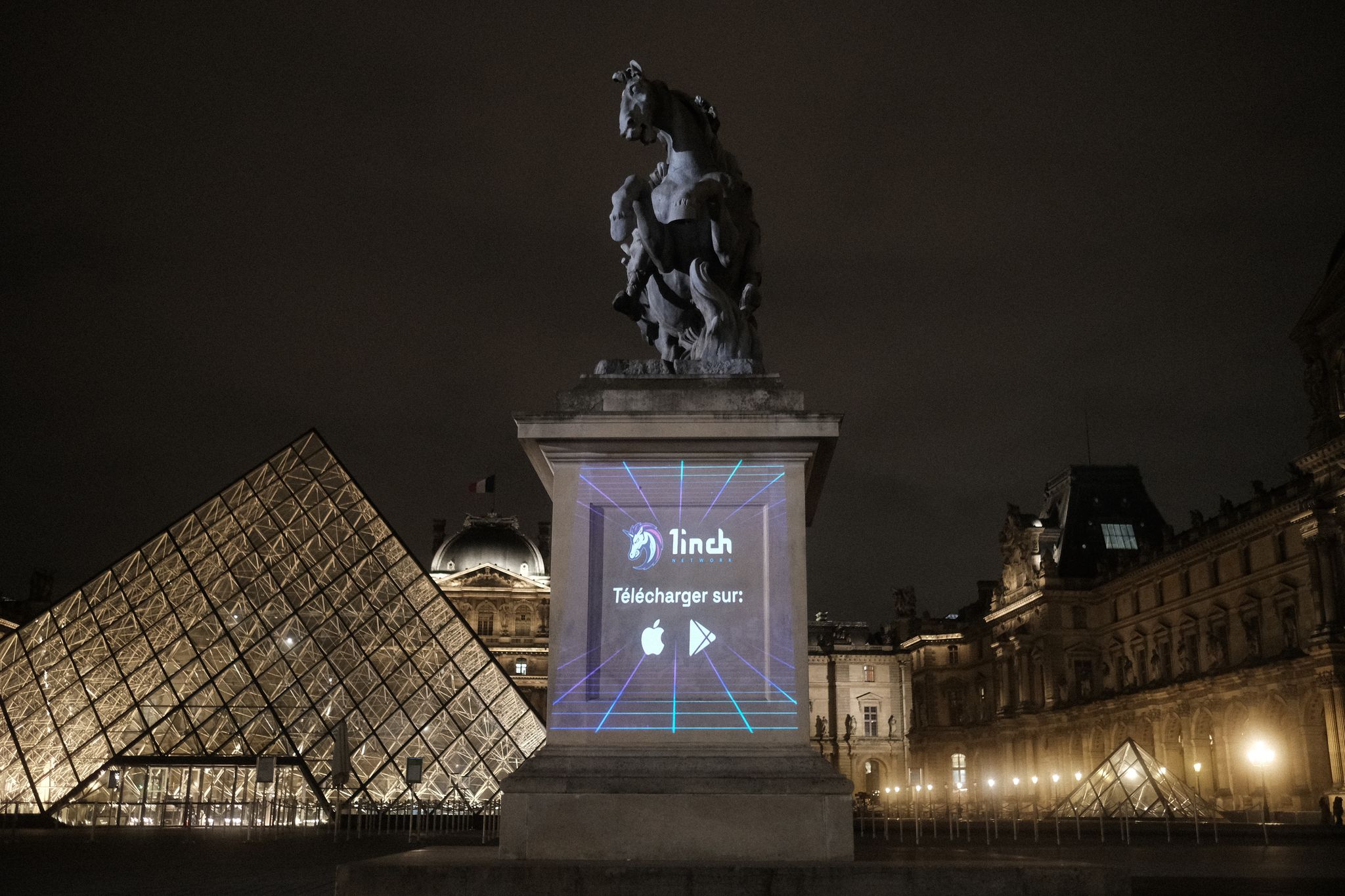
The Dutch and Benelux industry term for outdoor projection advertising, using a projector to display static or moving imagery on buildings or other surfaces.
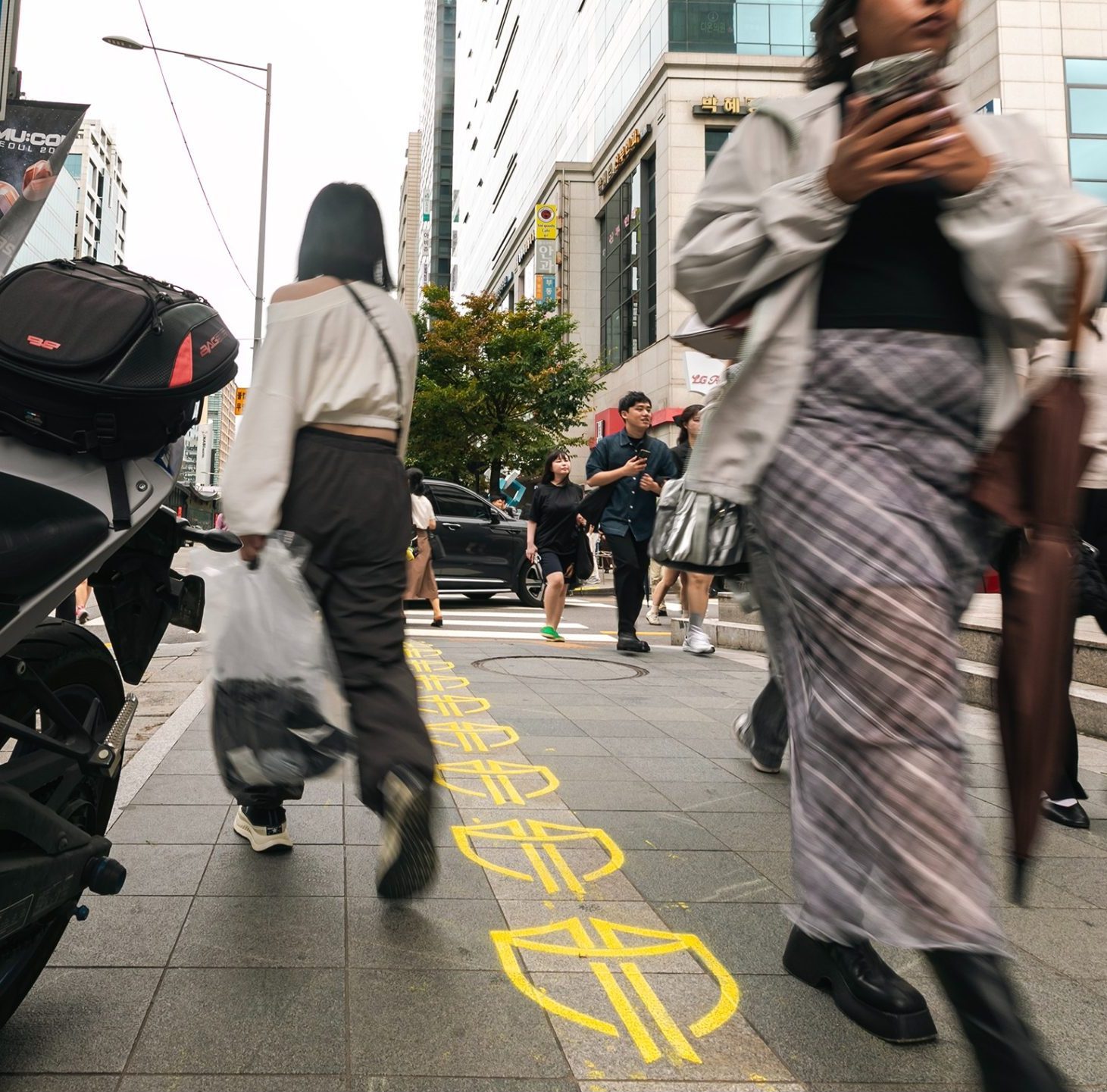
Temporary messages or images applied to pavements or other suitable surfaces using chalk-based paint or spray, often through a stencil. Longevity depends on the product, surface, weather and cleaning.
A group that suddenly assembles in public to perform a coordinated act, then disperses, staged to surprise passers-by and earn coverage.
Printed or adhesive graphics applied to floors or pavements to place a message directly in the audience’s path.
Direct distribution of printed flyers or leaflets to people in public spaces, at events or near selected locations.
An informal marketing label for lower-impact street-marking techniques, especially reverse graffiti and some temporary chalk-based executions. It has no single standard technical definition.
Temporary projection of branded static or moving imagery onto buildings and other urban surfaces, often using a mobile projector and typically most effective after dark.
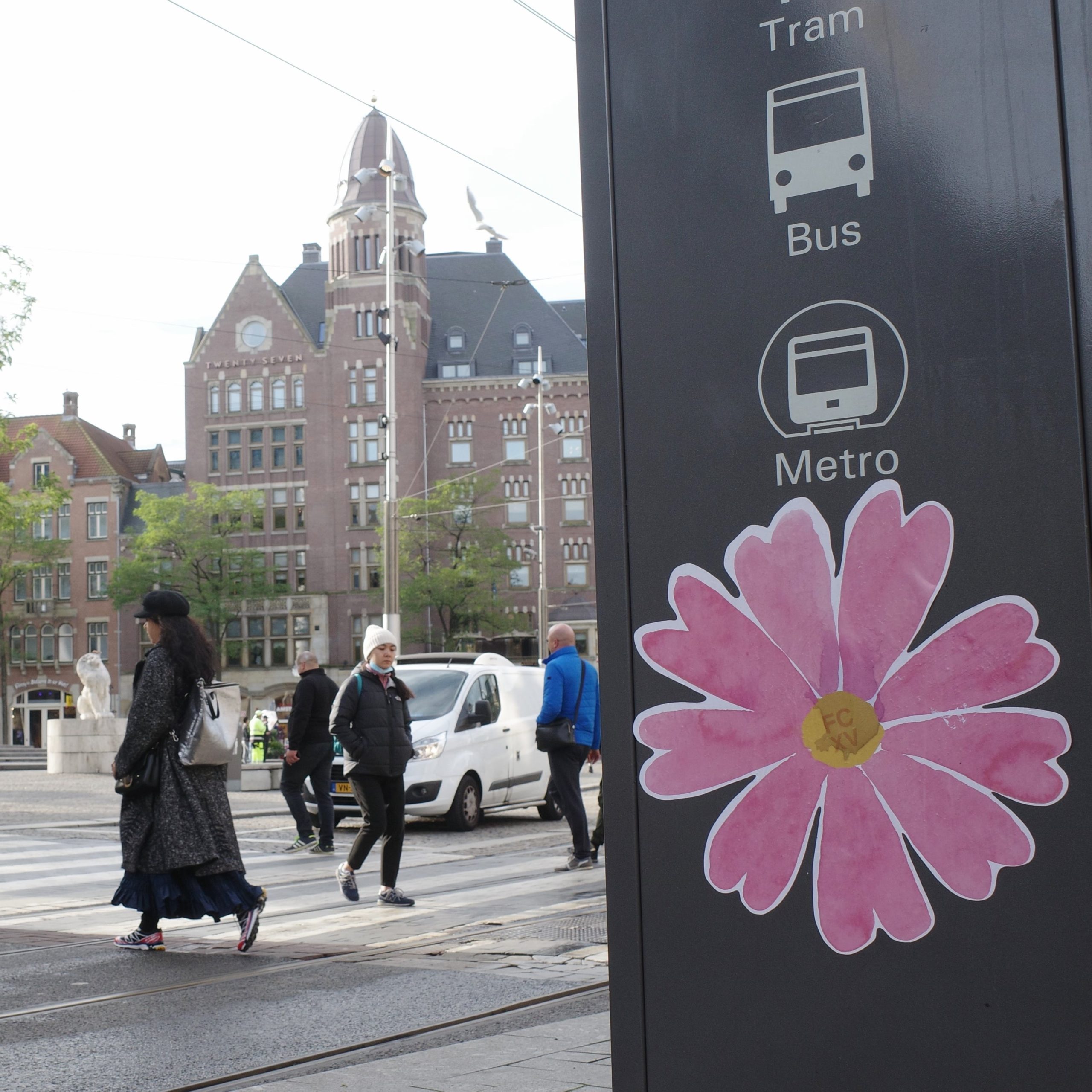
A paper artwork or poster, often cut out to its shape, pasted directly onto a surface using wheatpaste or another paste adhesive.
A projection technique in which creative is mapped to the contours and geometry of a building or object so the surface appears to transform.
Creating an image by selectively cleaning dirt or grime from a surface rather than adding paint or ink.
Giving consumers free product samples to encourage trial, often face-to-face on the street, at events or in retail.
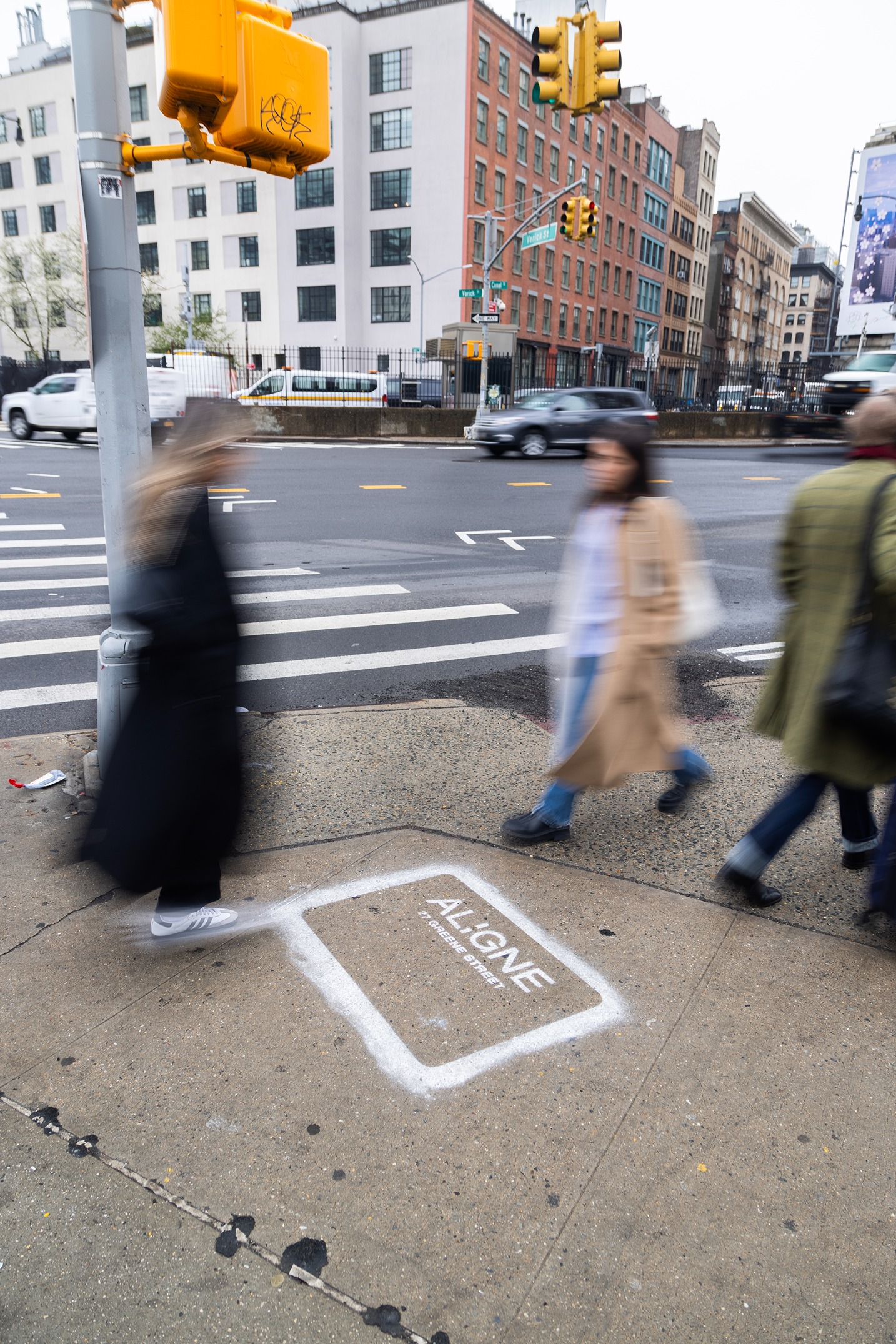
A cut template through which paint, chalk or spray is applied to reproduce a design cleanly and repeatably.
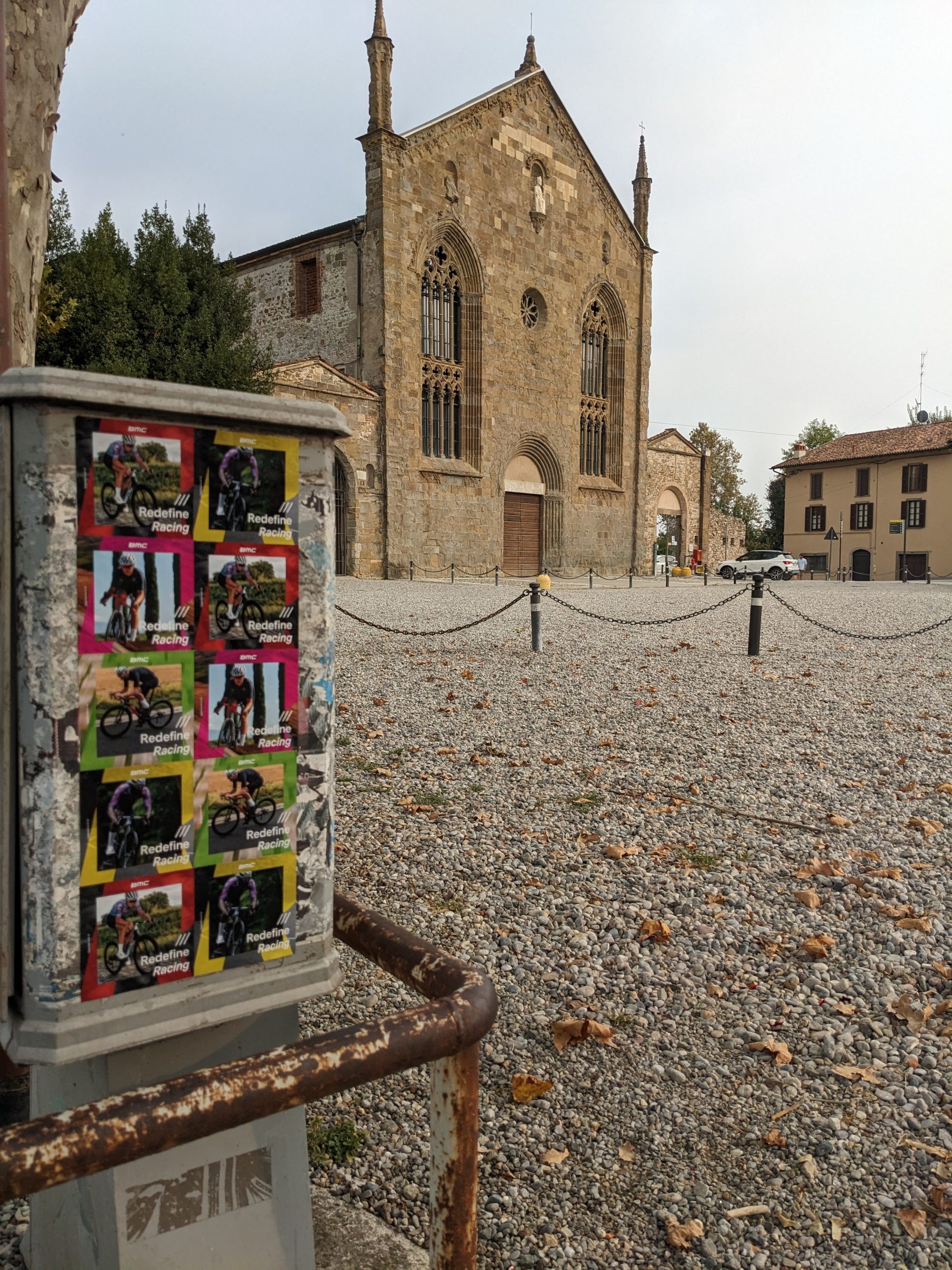
Placing branded stickers across multiple high-visibility urban locations as a street or guerrilla tactic. Authorisation depends on the site.
Artwork or branding constructed from adhesive tape applied to a surface.
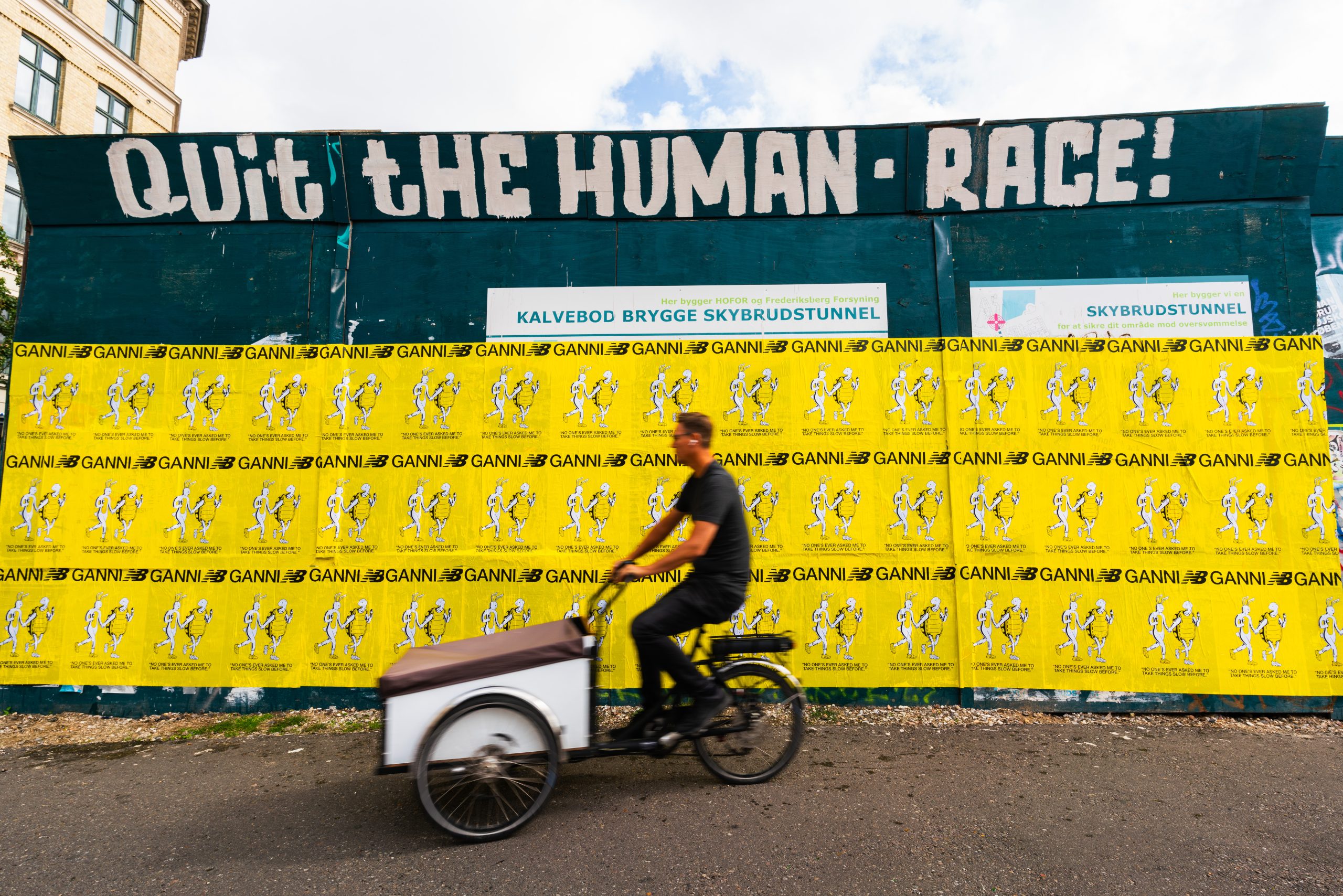
A street-poster format built around repeated or clustered paper posters on urban surfaces to create high visual density. Depending on the site and market, placements can be authorised or unauthorised.
The materials, crews and surfaces behind a poster campaign.
Why we are called Stadsbehang: the name means city wallpaper in Dutch, a nod to covering urban space with posters. It is our name, not an industry term, which is why it is not in the A to Z.
Poster paper with an opaque blue backing that stops underlying posters, colours or surface markings from showing through. Common for outdoor poster campaigns.
A temporary solid fence or enclosure around a construction or development site, often used as an advertising or poster surface.
Placing a new poster directly over an existing one, either as routine campaign replacement or to take over an existing posting surface.
In general use, a printed sheet carrying advertising creative. In US OOH, Poster also names a standardised large-format display formerly known as a 30-sheet, roughly 12 ft 3 in by 24 ft 6 in.
A location or display position designated for poster advertising. On authorised OOH inventory it is sold or managed by a media owner.
The crew that installs posters across campaign locations and, where required, maintains, refreshes and documents the sites.
In traditional US OOH, an adhesive strip used to cover or update part of the copy on an existing display. In street-marketing slang, snipe or sniping can also mean a small poster or sticker placement.
A starch-based paste, traditionally flour or wheat starch and water, used to adhere paper posters and paste-ups to surfaces.
The named formats you will see on a rate card or artwork spec. Europe leans metric (A and B series); the UK and US also count in sheets.
The ISO 216 A-series of metric paper sizes, widely used for print and poster production in Europe and many other markets. A0 is 841 by 1189 mm and each successive size halves the area. Common poster sizes include A0, A1 and A2.
In the Netherlands, a bus or tram shelter and, in OOH buying, often shorthand for the roughly 2 square metre shelter poster format and network. The common Dutch print size is 1185 by 1750 mm; always check the media owner’s spec.
The ISO 216 B-series, a parallel metric paper-size system. B1 is 707 by 1000 mm under ISO 216; 700 by 1000 mm is also commonly used as a rounded production format. Widely used for European street posters.
A large-format OOH display designed to be seen from a distance, usually along roads or at high-traffic urban locations. Exact dimensions vary by market and operator; 8 square metres is a common Dutch format.
In US OOH, the largest standardised billboard format, typically around 14 by 48 ft, usually along major roads.
In US OOH, a standardised poster format of roughly 6 by 12 ft, historically an 8-sheet, common in urban neighbourhoods and on smaller roads.
An informal, operator-defined term for an exceptionally large or premium OOH site, usually in a landmark or very high-traffic location. There is no universal standard size.
A freestanding street-furniture advertising unit, normally at eye level in city centres and along major urban routes.
A large-scale advertisement hand-painted or applied directly onto a building wall.
Two different legacy systems. In the UK, posters are sized in sheets, for example 6-sheet street furniture, 48-sheet roadside billboards (about 3.05 by 6.10 m) and 96-sheet large billboards. In the US, legacy terms differ: an 8-sheet is a junior poster, a 30-sheet is a Poster, and a bulletin is described by its foot size.
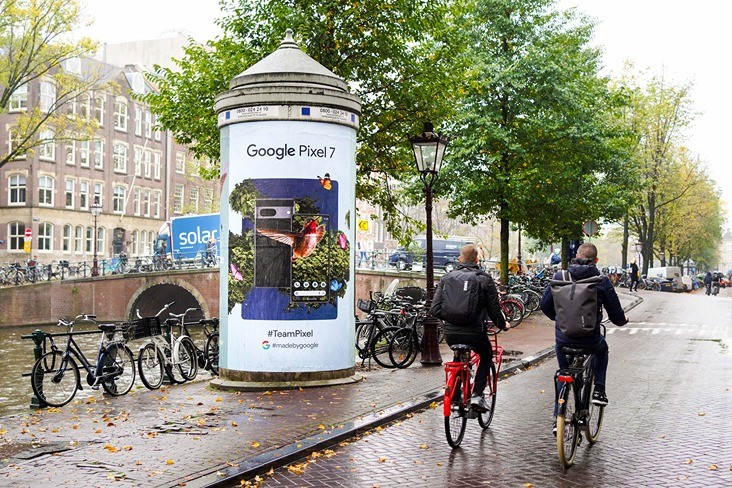
Large cylindrical advertising columns, often wrapped for 360 degree visibility.
A large OOH execution painted or attached directly onto the exterior wall of a building. Often applied as a full takeover of a wall or facade for maximum impact.
Oversized wild-posting executions beyond standard A and B poster sizes. Exact dimensions are specified per campaign.
Formats built into the fabric of the city and its transport network.
A freestanding, two-sided pavement sign, often A-shaped, used for temporary local advertising.
Advertising displayed on or incorporated into a bench at a bus stop or transit waiting area.
The advertising panel built into a bus or tram shelter.
A freestanding, eye-level street-furniture display used for advertising and, in some designs, municipal information, maps or wayfinding.
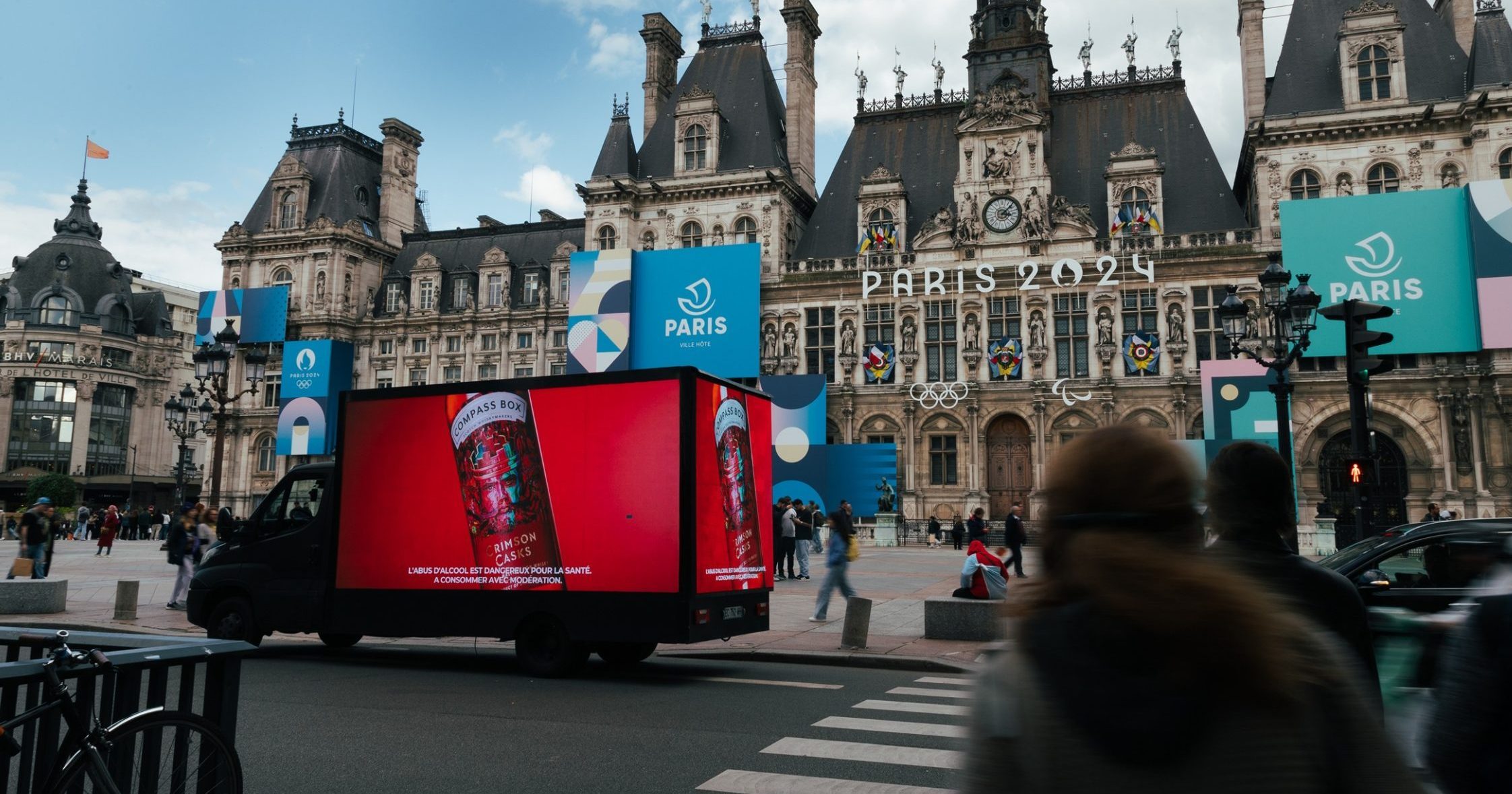
A vehicle fitted with one or more digital LED screens, driven or parked at selected locations to display advertising.
OOH formats integrated into eye-level city fixtures such as shelters, panels, benches, kiosks and columns, usually close to pedestrians.
Advertising on public-transport vehicles and within transport environments such as stations, stops and terminals.
In the Netherlands, a temporary two or three-face A0 poster structure mounted around a lamp, tram or utility pole. It is not a freestanding pavement sign.
Advertising within metro or subway systems, including stations, platforms, escalators, corridors and trains.
Printed or cut vinyl film applied to all or part of a vehicle to turn its exterior into advertising space.
When the brief says go big.
A large printed fabric, mesh or vinyl graphic covering a substantial part or all of a building facade.
A design element cut out beyond the normal rectangular frame of a poster or bulletin for a three-dimensional, eye-catching effect.
A cylindrical advertising pillar wrapped around its full circumference with a single campaign creative.
Media-sales shorthand for OOH inventory or executions selected primarily for exceptional scale, prominence or standout, rather than a specific physical format.
A broad category for oversized OOH displays intended to command attention at distance, including large billboards, facade displays and banners. Size thresholds vary by market.
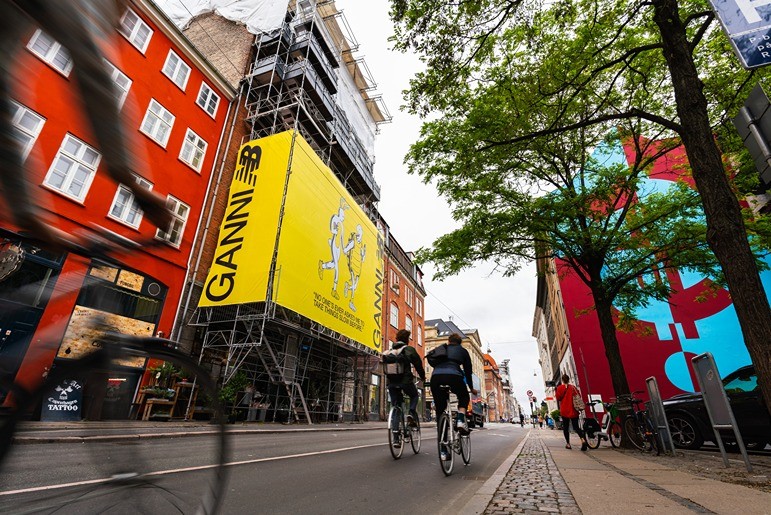
A large printed fabric or mesh graphic fixed to building scaffolding, often covering part or most of a facade during construction or renovation.
In US OOH, an oversized or highly customised premium execution, usually larger than a standard bulletin and often featuring extensions, lighting or movement. International usage is looser.
Screens, software and the data layer that increasingly sits on top of the street.
Creative constructed so it appears three-dimensional or spatially distorted when viewed from a particular position. Often used on large corner or curved screens, but the technique does not require a curved screen.
Splitting the day into segments and scheduling different ads or budgets to each, matching message to moment.
A large-format billboard whose content is changed electronically. Animation or full motion vary by screen, operator and local rules.
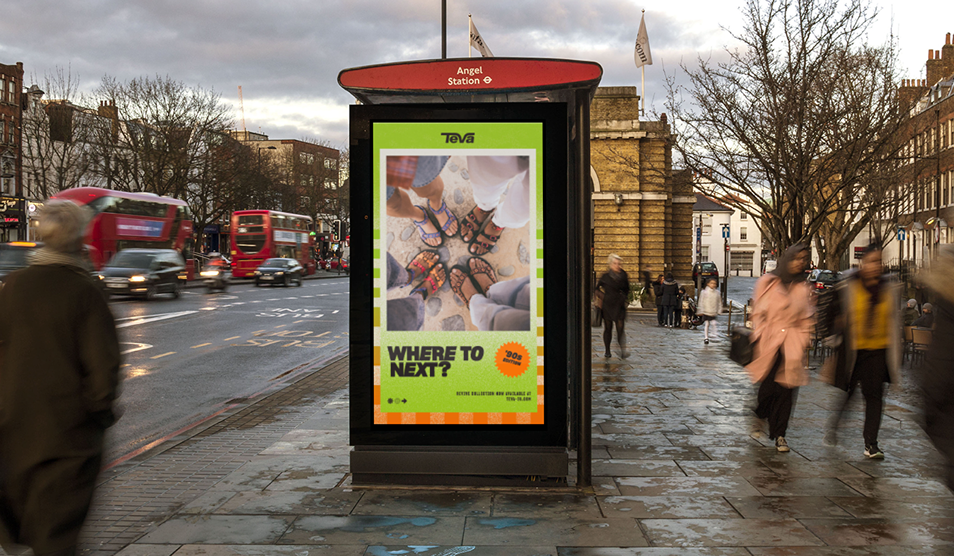
Out-of-home advertising delivered on digital displays whose content can be changed electronically, remotely and, where the system allows, dynamically using data or contextual triggers. Motion and video are capabilities, not requirements.
Software used by advertisers or agencies to automate buying across digital inventory sources, exchanges and SSPs, including DOOH.
Creative that changes according to predefined rules, data or contextual signals such as location, time, weather or live information.
Digitally created or composited content that makes an OOH execution appear to exist in the physical world when it did not occur as shown. Usually made for online or social distribution.
Continuous moving-image or video creative on a digital OOH screen, as opposed to a still frame or limited animation.
Defining a virtual geographic boundary so location data can trigger, classify or measure activity for devices entering, leaving or present within the area.
The full rotation of ads on a digital screen before it repeats. A shorter loop means each advertiser appears more often.
A single delivered play or showing of a creative on a digital OOH screen. Proof-of-play records show delivery, not audience exposure.
The automated transaction and buying of DOOH inventory through programmatic technology, including DSPs, SSPs and automated deals. Data and contextual targeting can be used, but are not what make a buy programmatic.
The proportion of a screen’s loop that a brand occupies.
Technology publishers or media owners use to automate selling inventory and connect to exchanges and DSPs.
On a digital screen, a still image with no motion during the spot.
Triggering or changing creative based on live weather, a classic dynamic DOOH tactic.
The live, physical, made-for-sharing end of the business.
An execution or experience designed to bring a brand to life and stimulate engagement or action.
The informal conversation, attention and word of mouth generated around a campaign or activation, online or offline.
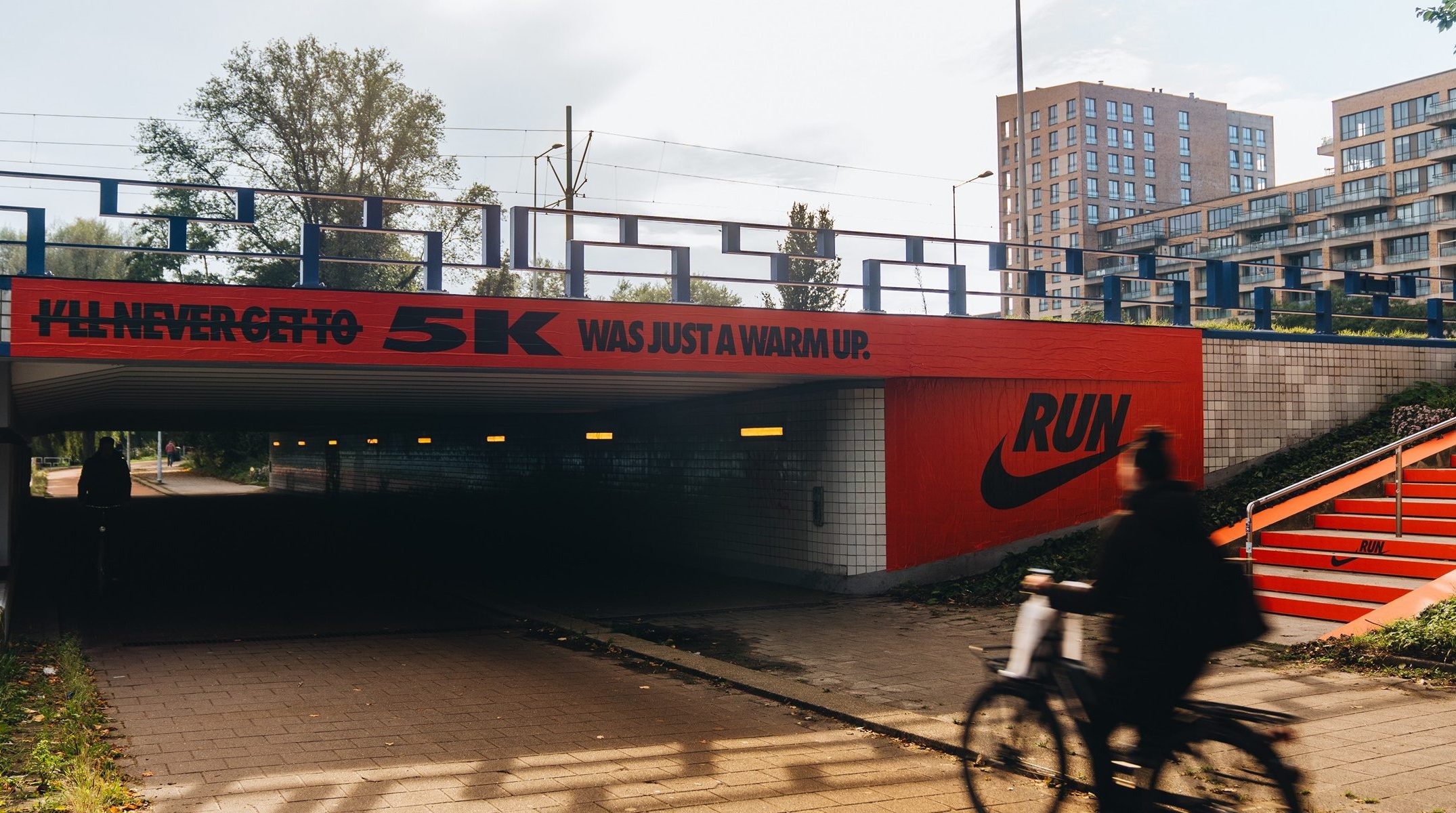
A coordinated campaign that creates concentrated brand dominance across multiple OOH, guerrilla or activation touchpoints within a city or district.
A staged, interactive event designed to create a memorable in-person experience and shareable content.
Adding game mechanics such as challenges, rewards or competition to an activation to drive participation.
An experience designed to surround and involve participants through spatial, sensory, interactive or digital elements.
A physical, often sculptural brand object placed in public space to be noticed, used or photographed.
A temporary branded space or event that appears for a short window, then disappears.
A touring activation that repeats the same branded experience across multiple cities or locations.
A custom-fabricated, non-standard physical OOH or activation structure made for one campaign.
An interactive wild-posting tactic in which posters, prints or objects are designed to be removed and taken home by the audience.
How campaigns get scoped, sold and counted. Different markets use different audience currencies, so several of these carry a market tag.
In US and traditional OOH, the number of advertising units required to achieve a desired GRP or showing level in a market.
The estimated average 24-hour vehicle traffic passing a road location across a year, adjusted for seasonal variation. A traffic input, not an audience measure by itself.
The distance along the line of travel from first full visibility of a roadside display until the copy becomes unreadable.
Selecting the specific locations and dates for a campaign to optimise placement and timing.
The volume of vehicle or pedestrian traffic passing a location. It indicates potential exposure but is not itself a measured advertising audience.
The cost of delivering 1,000 measured impressions or contacts under the relevant audience currency. The arithmetic is universal; what counts as an impression differs by market.
A US legacy estimate of people in vehicles passing and potentially exposed to a display in a daily period. A circulation measure, no longer endorsed by Geopath as a buying currency.
How long a person lingers near an ad and so has the chance to absorb it. High in stations, queues and shelters.
The scheduled period during which a campaign runs.
The average number of times a reached individual is exposed to the campaign within a defined period, under the relevant measurement system.
Total in-market impressions delivered by a schedule, expressed as a percentage of the market population. GRPs are based on gross impressions and can include repeat exposure.
A gross count of advertising exposures or contacts according to the applicable measurement system. The precise qualification varies by market.
The total pool of ad space a media owner or network has available to sell.
The time needed to plan, produce and install a campaign before it can go live.
A company that controls, operates and commercially sells OOH inventory. It may own the structure or hold the media rights, but does not necessarily own the land.
The unduplicated audience: unique individuals reached, counting repeat viewers once.
A basic exposure concept: an opportunity for a person to be exposed to media, which does not establish that the ad was actually noticed. Modern OOH currencies apply visibility adjustments beyond raw OTS.
The scheduled date on which installation of campaign creative begins or is due. Not every panel becomes visible at exactly the same moment.
Documented evidence that a campaign ran as booked, which may include photos, locations, dates and timestamps.
A media owner’s published price list by format, location and duration.
The unduplicated number or percentage of a target audience reached at least once during a campaign, under the applicable measurement system.
Which side of a road a roadside display faces. A right read is seen on the right-hand side of the road by approaching traffic; a left or cross read is seen on the left-hand side, across opposing lanes.
A brand’s share of advertising presence within a defined market, channel or competitive set. Specify the basis, for example spend, faces, impressions or screen time.
In US and traditional OOH, a legacy level of market delivery, commonly expressed as #25, #50, #75 or #100. The number of panels varies by market; modern planning translates it into audience delivery.
A clear, unobstructed view of an OOH unit from where the audience is. A unit with a poor sightline underdelivers.
Gross rating points calculated for a specified target audience: target-specific in-market impressions relative to the target population.
In Great Britain (Route), a contact adjusted for the likelihood that an exposed person actually sees the advertising frame, based on factors such as distance, angle, duration and format.
In the US (Geopath), the proportion of a unit’s OTS or circulation estimated likely to notice the ad, based on visibility characteristics. An adjustment index, not an audience measure itself.
The technical vocabulary that keeps a print job from arriving cropped, blurry or the wrong colour.
Specifications are supplier-specific. These entries explain what each term is; always follow the media owner’s or printer’s own template for exact figures.
The production-ready creative file or files supplied for printing, fabrication or digital display, to the supplier’s specification.
A print or panel lit from behind for night-time visibility, standard in abris and mall displays.
Extra image area extending beyond the finished trim edge so minor cutting variation leaves no blank edge. The required amount varies by format and supplier.
Small connectors left in a stencil so isolated island parts do not fall out when the stencil is cut.
The four-process-colour print model: cyan, magenta, yellow and black. Many workflows require CMYK artwork, but colour profiles, ink coverage and black recipes follow the printer’s specification.
The visual and written content of the ad itself, as opposed to the media space it runs in.
Cutting a printed piece to a custom shape rather than a rectangle.
Resolution describes image detail. Raster artwork is measured in pixels per inch (PPI); DPI describes output dots, though the terms are often used loosely. The effective resolution needed depends on final size, artwork scale, process and supplier.
A cut through the sticker or vinyl face material but not the backing liner, so the sticker peels away cleanly.
A visual preview showing how creative will look in situ before production.
Text converted from live font characters into vector paths so the artwork no longer needs the font installed. Whether to outline or embed depends on the supplier workflow.
A print setting where one ink prints over the ink beneath rather than knocking it out. Check it in overprint or separation preview.
Detailed directions assigning specific copy to specific locations for a campaign.
Polyvinyl chloride, a durable plastic used in many flexible OOH substrates including banner and self-adhesive vinyl. Formulations and intended use vary.
The margin inside the edge where key text and logos must stay so nothing is cut off or hidden by a frame. The required margin is format- and supplier-specific.
Industry shorthand for flexible plastic film or sheeting used for wraps, stickers and some banners, commonly PVC-based. Material, adhesive and finish vary.
The rules of the street, and the words that appear when they are (or are not) followed.
Terminology and approval requirements differ by location. These definitions describe industry concepts, not legal advice; always check the rules and permissions for the specific site.
Authorised placement: an execution for which the required site or property permission and any applicable municipal, regulatory or operator approvals are in place. Unauthorised: one or more required permissions are absent.
A formal demand requiring a party to stop a specified activity and usually not repeat it.
A local rule prohibiting or restricting unauthorised poster placement, with enforcement against it.
Formal approval from the relevant public authority for an advertising placement or activity where such approval is required. It is separate from the site or property owner’s permission; a campaign may need both. Dutch requirements vary by municipality and may involve a permit, exemption or notification.
A Dutch municipal tax that may be charged for objects placed on, under or above land belonging to the municipality, such as an advertising sign or scaffolding. Whether it applies and the rate depend on the municipality.
The party that owns or controls the property, wall, facade or site on which an execution is placed. Site-owner consent may be required but does not replace public permits.
Removal of an installation or campaign at the end of its run, including any required cleaning or reinstatement.
| Dutch (NL) | International (UK / US / general) | What it is |
|---|---|---|
| Wildplak / wildplakken | Wild posting (US); fly-posting (UK, unauthorised) | Posters on urban surfaces, authorised or not |
| Beaming / wildbeaming | Projection, projection advertising | Projecting imagery onto buildings and surfaces |
| Abri | Bus shelter, transit shelter | Shelter and its ~2 m2 poster format (Adshel is a UK brand, not a translation) |
| Mupi | City information panel (functional) | Freestanding eye-level panel; MUPI is a JCDecaux-origin term, no exact English equivalent |
| Special zuil / peperbus | Advertising column, Morris column | Cylindrical wrapped street pillar (not kiosk) |
| Steigerdoek / bouwdoek | Scaffolding wrap, scaffold banner | Printed mesh or banner material over building scaffolding |
| Driehoeksbord | Pole-mounted A0 poster frame, lamp-post display | Two or three A0 faces around a pole (A-board is related, not equal) |
| Straatreclame | Street marketing, street advertising | Advertising aimed at pedestrians |
| Buitenreclame | Out-of-home (OOH), outdoor advertising | All advertising away from home |
| Merkactivatie | Brand activation | Live moment that brings a brand to life |
| Stadsovername | City take over | Concentrated brand dominance across a city |
| Plakploeg | Poster team, bill posters | Crew that installs and monitors posters |
| Plaksel / tarwelijm | Wheatpaste | Paste for posters and paste-ups |
| Reverse graffiti | Reverse graffiti (technique) | Image made by cleaning; distinct from green graffiti, a broader label |
| Afloop | Bleed | Image extended past the trim edge |
| Vergunning | Permit (public authority) | Authority approval, separate from site-owner consent |
| Bereik / frequentie | Reach / frequency | How many people, how often |
| Plakrapportage | Proof of performance (POP) | Delivery documentation: photos, locations, dates, timestamps |
Leave your email and we will send you the full, print-ready PDF: every term, the Dutch and international variants, and the quick-reference sheet.
We email you a copy as well. No spam, unsubscribe anytime.
Your copy of the Street Advertising Lexicon is ready. We have emailed it to you as well, so it is saved for later.