Why we shoot the wall
Every campaign we put up gets photographed. For different reasons. Discover what those pictures are for.
Two ways to buy the same digital screen. What each one gets you, what it costs, and how to choose.
A brand wants its campaign on screens at train stations and on screens along the high street. Simple enough. Then the questions start.
Book it direct, and that can mean two publishers, two negotiations and two sets of conditions. Book it programmatically, and both sit in one platform. Same screens. A different purchase.
We get asked about this every day, so here it is in one place: what direct and programmatic buying are, how they differ, and when to pick which, or whether to use both.
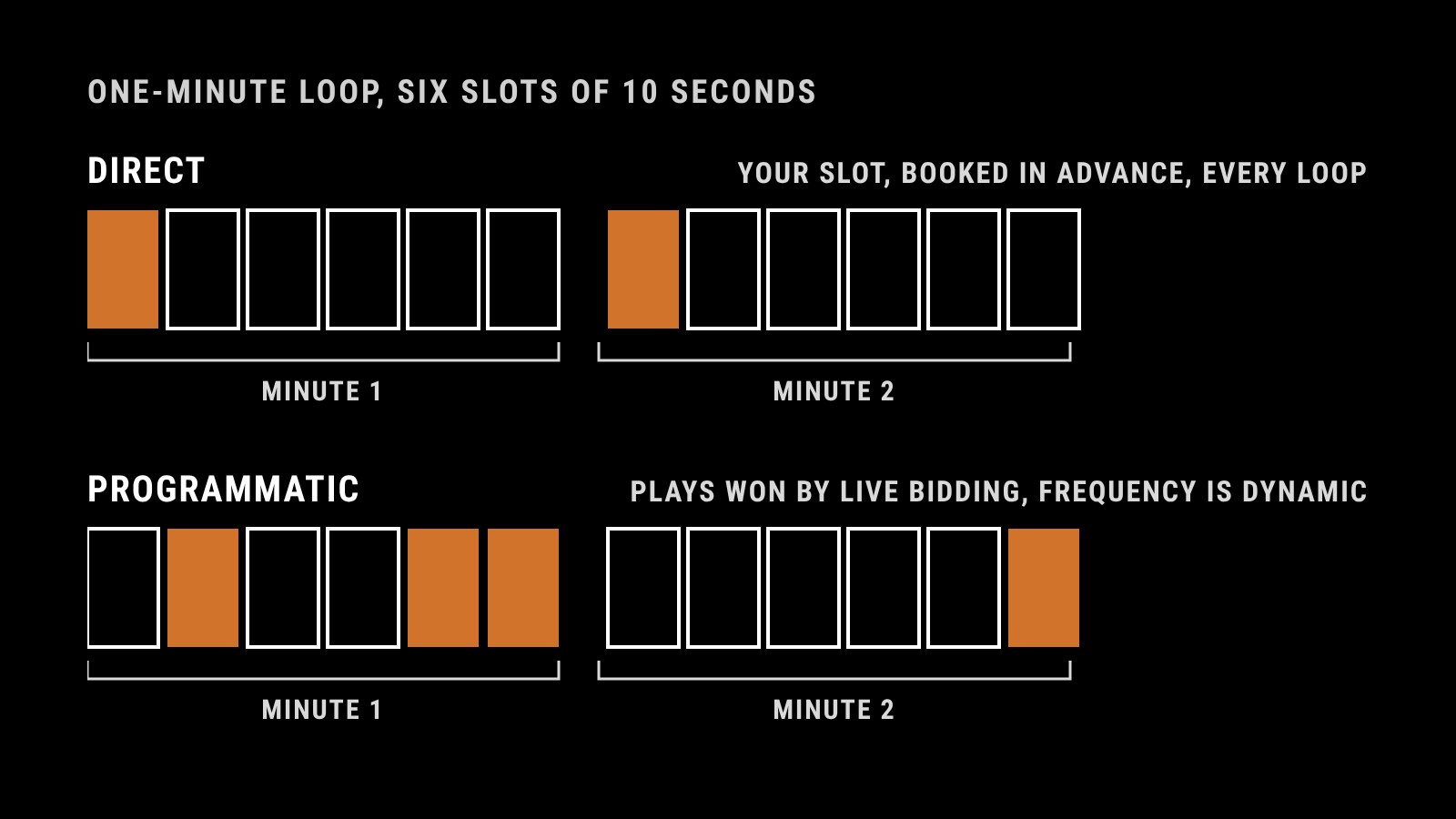
A digital out-of-home screen runs a loop. The industry standard is a one-minute loop built from 6 or 10 second slots, so several advertisers share the same screen and take turns. How much of that loop is yours is called share of time (SOT), or share of voice (SOV). It is one of the key lines on any quote we send: the higher your SOT, the more often your ad comes round.
Direct buying means you buy a fixed slot in that loop from the publisher, the company that owns the screens. Depending on your plan and budget, your ad plays every minute, every two minutes or every three. It is booked before the campaign starts. You know exactly what you get.
Programmatic buying means you buy through a platform that connects to many publishers at once, and you bid for plays in real time. Every time a slot comes up, the system decides whether your ad gets it, based on your targeting and your bid. How often you play is dynamic, and you can change the targeting while the campaign is running.
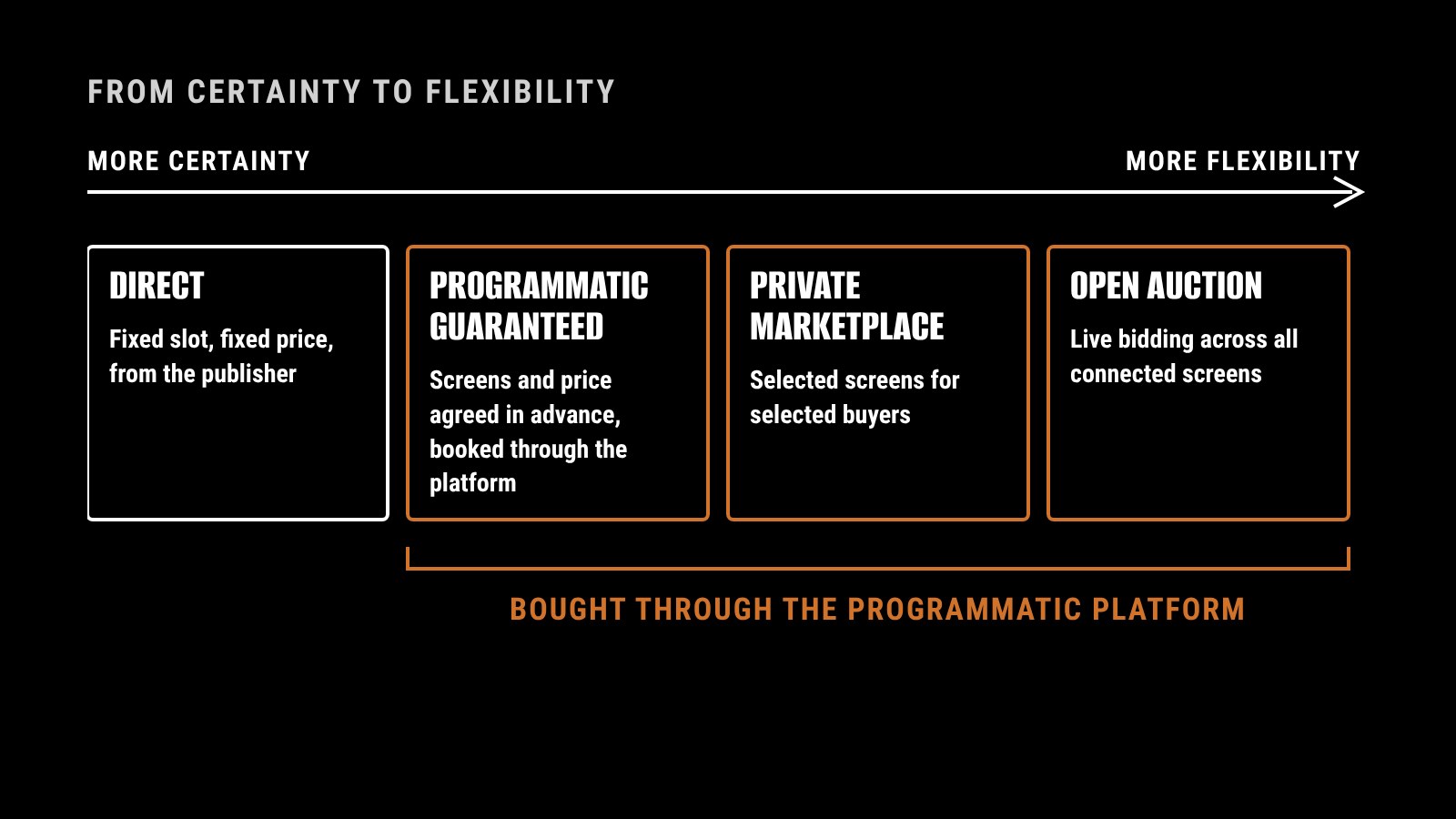
What most people mean by programmatic is the open auction described above. Two other deal types run through the same platforms. In a private marketplace, a publisher offers a selected set of screens to selected buyers, at a fixed or a bid price. With programmatic guaranteed, the screens and the price are agreed in advance, as with a direct buy, and the booking runs through the platform. You keep most of the certainty of direct and gain the workflow of programmatic.
| Direct | Programmatic | |
|---|---|---|
| How you buy | From each publisher separately | One platform, many publishers |
| What you get | A fixed slot in the loop, booked in advance | Plays won through live bidding. Frequency is dynamic |
| Changes mid-campaign | Limited once booked | Targeting and timing can change while it runs. The budget stays as agreed, but it can shift between screens |
| Location targeting | Yes | Yes |
| Time targeting | General time slots | Detailed schedules, hour by hour |
| Other triggers | Not possible | Weather, specific times, different ads per location, automatic audience targeting |
| Minimum spend | Set per publisher. Differs by publisher and screen type | No official minimum. Through us, usually from €5K |
| How it is priced | A fixed price for your slot | A price per thousand impressions (CPM) that moves with demand and targeting |
Two things are true at the same time.
On direct buys, minimum spends are set per publisher, and they differ by publisher and by type of screen. Buy across three publishers and you meet three minimums. On our international campaigns, a direct buy usually starts above €10K.
Programmatic has no official minimum. One screen for one hour near a concert can run on around €500. At Paper Trails, programmatic campaigns usually start from €5K. And because you only pay for plays in the places and hours you chose, a smaller budget goes further. That is why programmatic is usually the better route when the budget is tight.
One caveat. Programmatic is not automatically cheaper per play. Prices per thousand impressions move with demand, and the narrower your targeting, the more each impression can cost. The savings come from spending only where it counts.
In the Netherlands, basically every publisher is connected to the programmatic platforms. Even the airports: Schiphol went live with programmatic buying in January 2025, after Eindhoven and Rotterdam The Hague started in 2022.
Other countries are sometimes a step behind. Outside the Netherlands, programmatic may not reach every network on your plan, and part of it has to go direct. Check it per market before you choose a route.
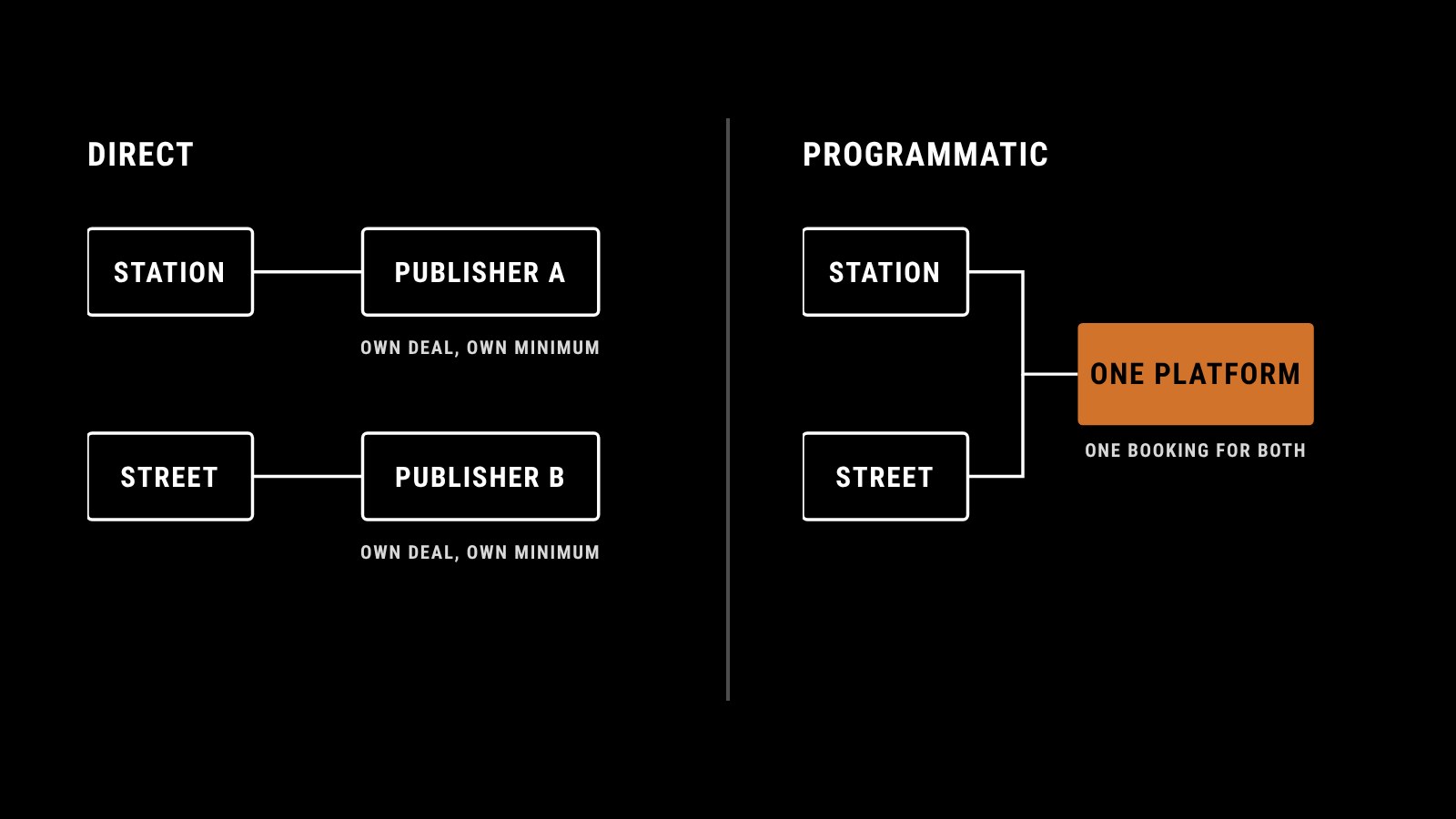
Some campaigns work best with a mix of both. A common setup is a direct base on the locations that matter most, with programmatic on top for extra reach, around events or for a specific audience.
The right route depends on the job. Tell us where, when and who you need to reach, and we’ll tell you how to buy it.
Sometimes that’s one route. Sometimes it’s both.
Every campaign we put up gets photographed. For different reasons. Discover what those pictures are for.
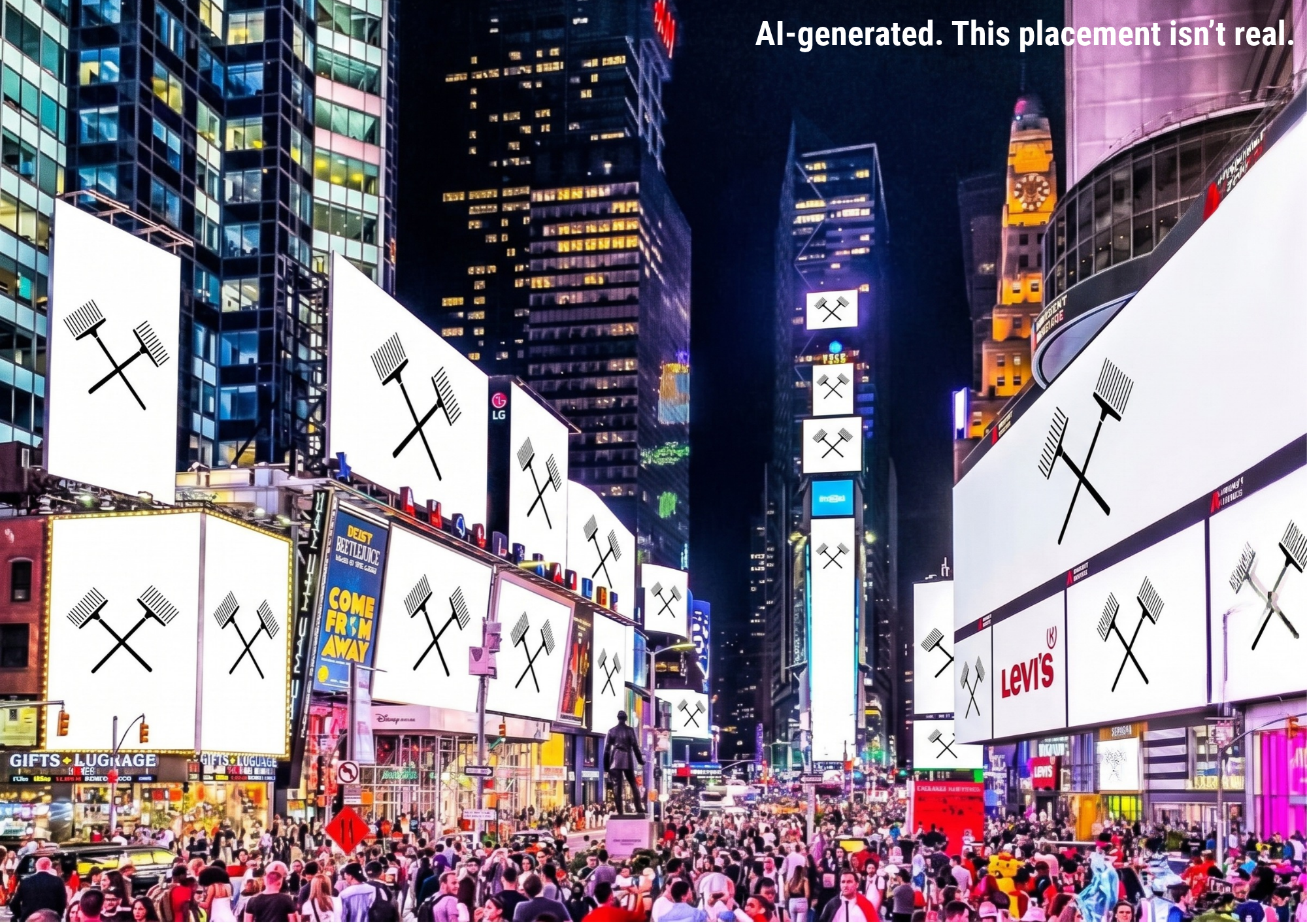
CGI ads that never existed, built on people not being sure. Now the law says you have to tell them. Real for proof, fake for reach.
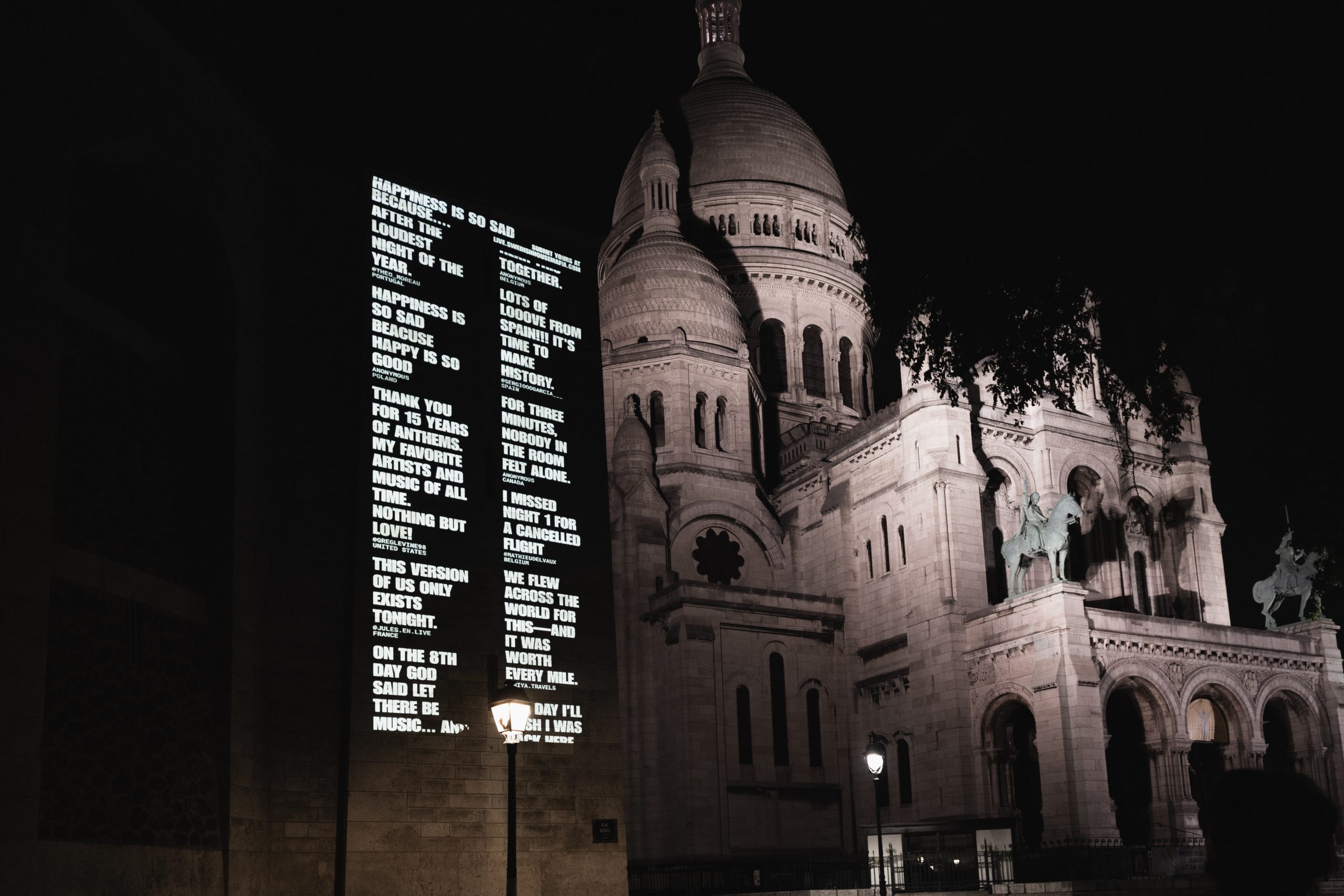
A logo on a building is just the warm-up. What a projection can do with place, sound and live interaction, and a silent disco idea for music clients.
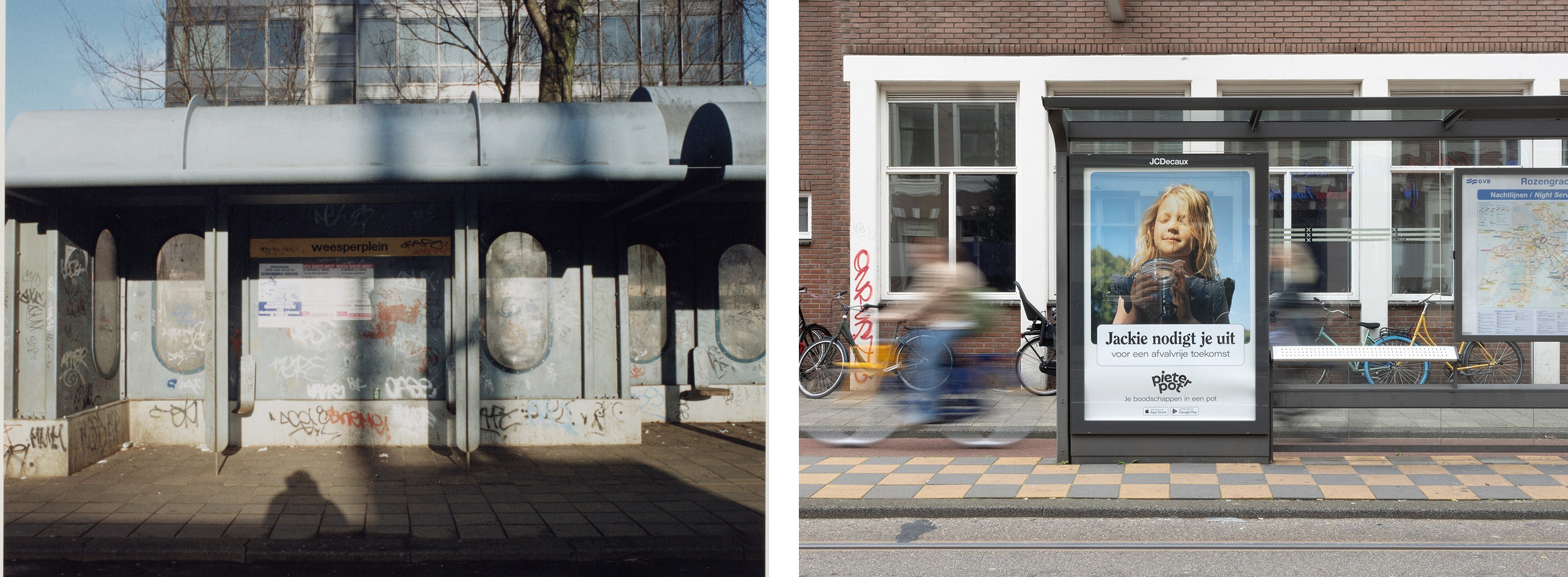
A bus shelter arrives in a city and the city pays nothing for it. Who owns the furniture, what each route costs, and why almost no city will tell you what it earns.
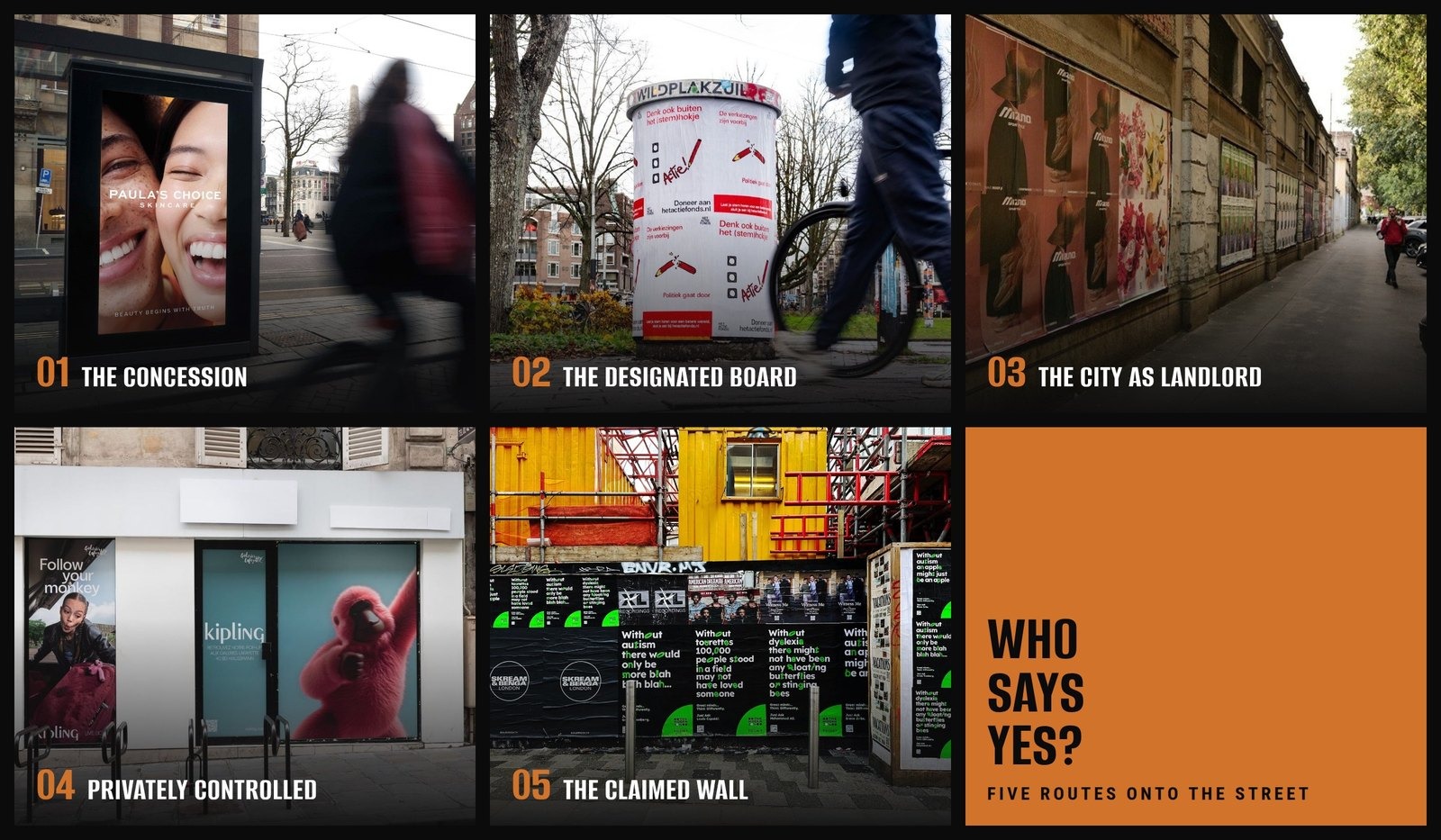
Five ways onto a street, and only four involve somebody saying yes. Who owns the surface, who to ask, and who pays when nobody did.
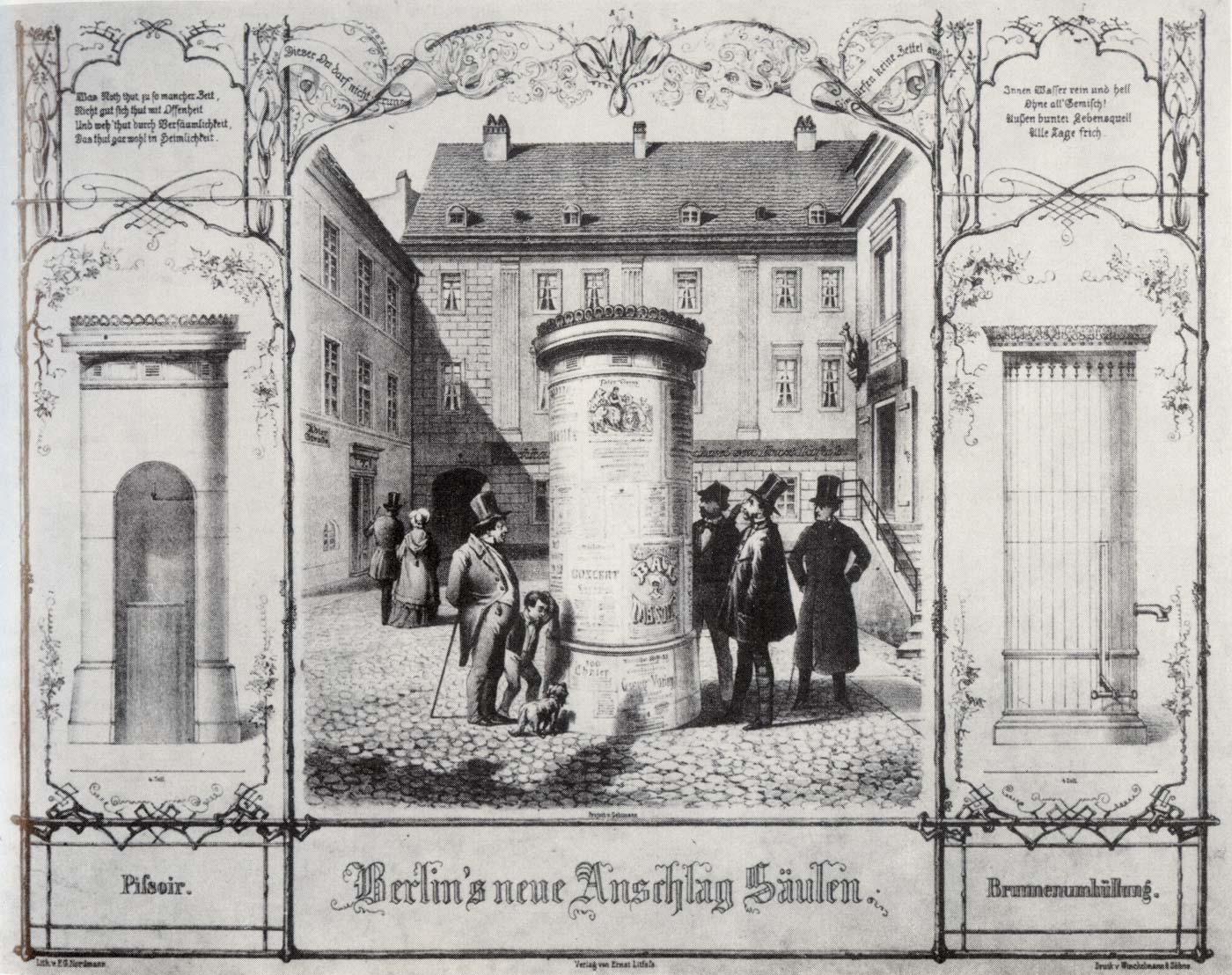
Two Amsterdam poster crews went to war over walls neither of them owned. And then, one of them got a licence from the authorities.

Guerrilla marketing was named in 1984. Amsterdam archives show us the trade is a century older. From an 1875 complaint to a wall for rent in 1915.
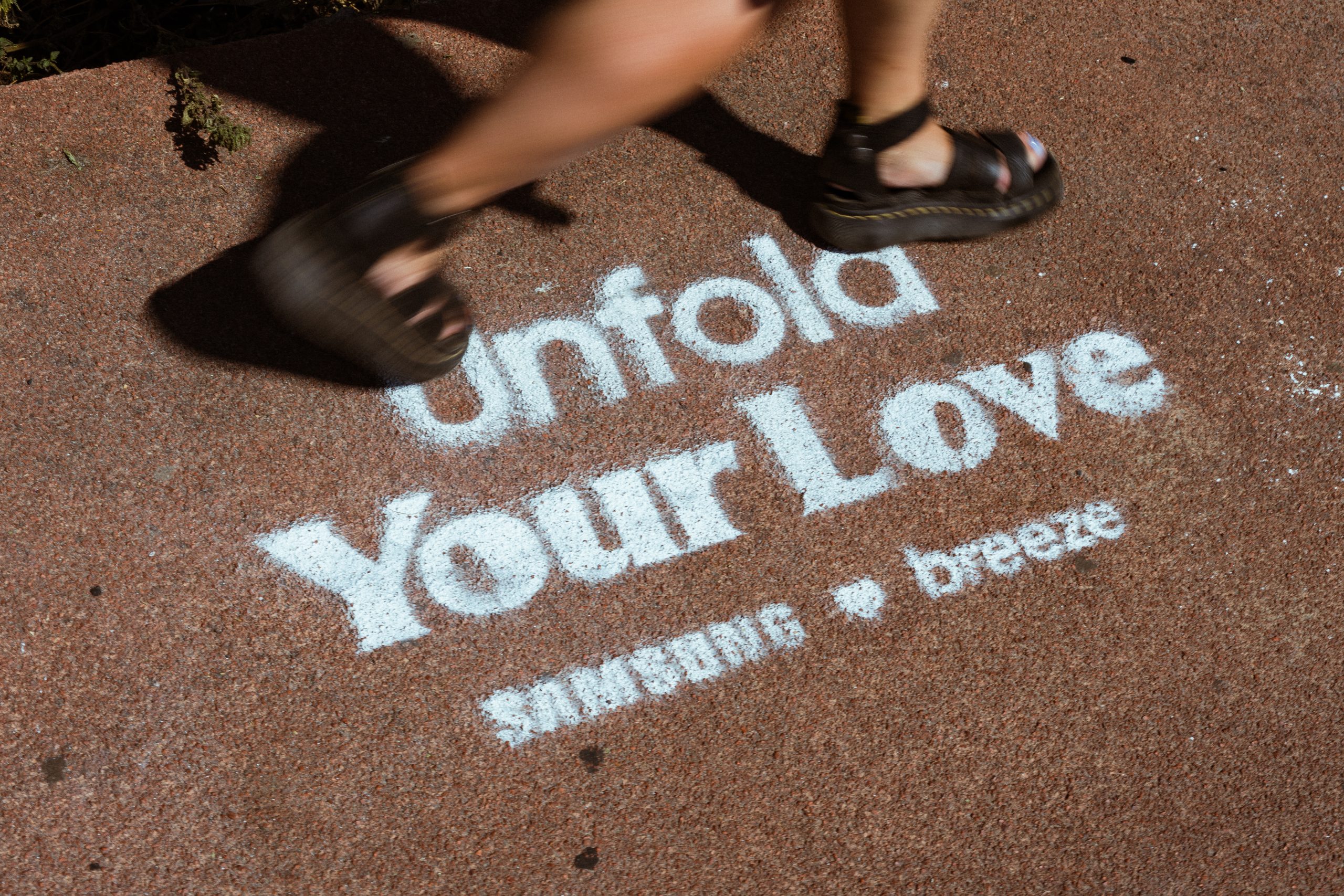
Reverse graffiti, green graffiti, chalk stencils: clients mix them up all the time. Here is what each technique is, how long it lasts, and how to brief correctly.